Disclaimer
This article is for educational purposes only and should not be used as a substitute for personalized medical advice, diagnosis, or treatment. Menopause symptoms can vary from woman to woman, and some symptoms may be related to other medical conditions. Please consult your gynecologist or healthcare provider before starting supplements, herbal remedies, major diet changes, or new treatments, especially if you have a medical condition, take medications, or have severe, unusual, or persistent symptoms.
7 Natural Ways to Support Your Body Through Menopause: A Doctor’s Guide
Menopause is natural, but the way it shows up in the body can be very different for every woman. Some women may experience hot flashes and poor sleep. Others are more troubled by weight gain, brain fog, low energy, mood changes, vaginal dryness, urinary symptoms, or a feeling that their body is no longer responding the way it used to.
In my practice, I rarely find that one single remedy solves everything. Menopause symptoms are often connected to several systems at once, hormones, gut health, blood sugar, stress response, sleep, muscle mass, vaginal tissue, bladder health, and daily lifestyle patterns. That is why I prefer a more personalized approach instead of giving every woman the same advice to “eat healthy” or “reduce stress.”
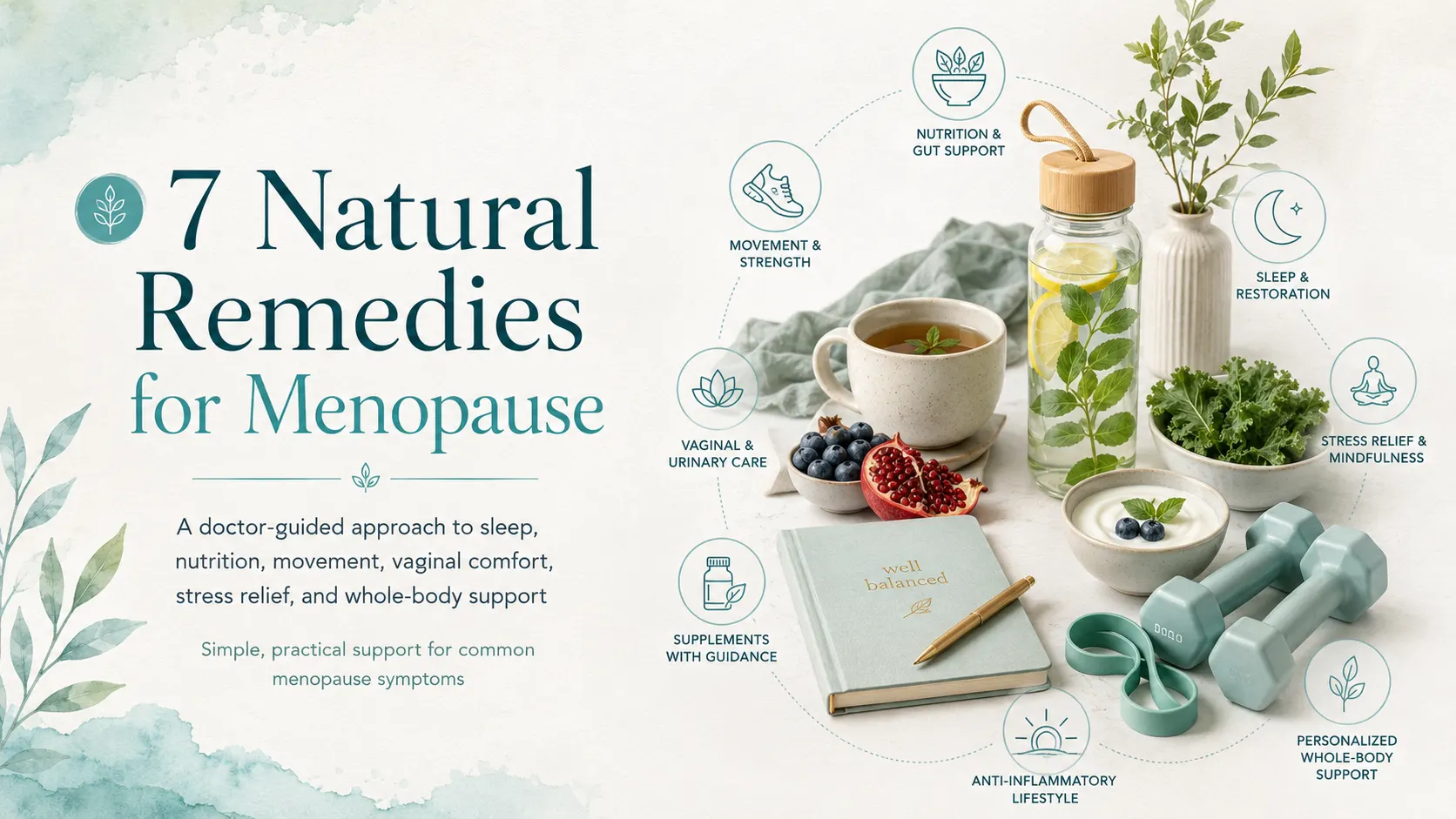
In this guide, I’ll walk you through 7 natural remedies for menopause that I commonly discuss as part of whole-body menopause support. These include diet and gut support, strength and movement, breathwork and sleep reset, vaginal and urinary care, supplements used carefully, functional testing when needed, and anti-inflammatory lifestyle changes. My goal is to help you understand what may help, how to use these remedies safely, and when it is important to seek medical guidance instead of managing symptoms on your own.
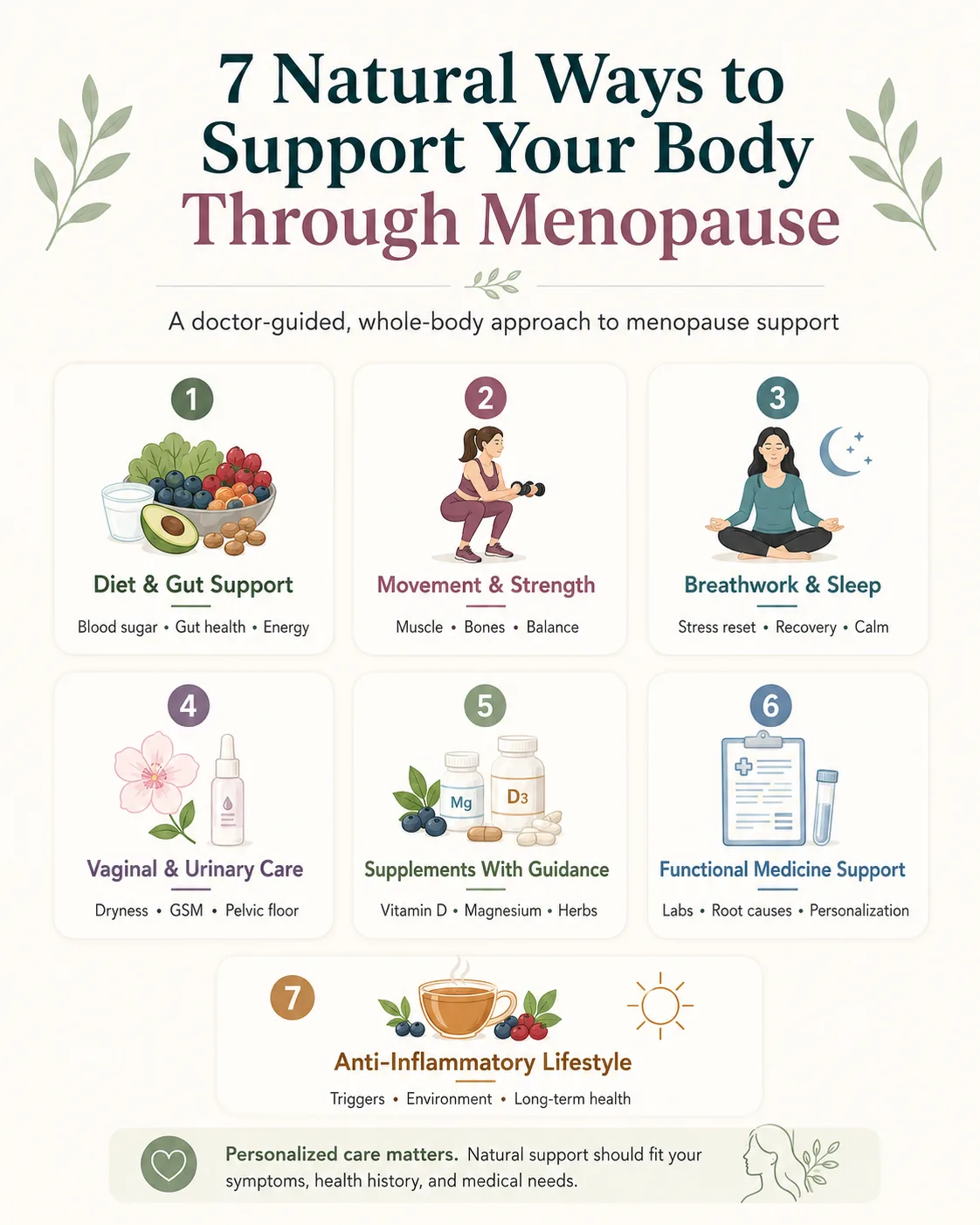
One important distinction before we begin: most of what follows supports your overall health and wellbeing during menopause. That is valuable, but it is not the same as proven treatment for specific symptoms. Only some approaches have strong evidence for direct symptom relief, and I will point out the difference as we go. If your symptoms are moderate or severe, effective medical treatments exist, and natural support works best alongside proper medical care, not instead of it.
Quick Overview: 7 Natural Remedies for Menopause
Before we go deeper, here is a quick look at the 7 natural remedies covered in this guide. These are not one-size-fits-all solutions. Each remedy supports a different part of menopause health, from metabolism and gut function to sleep, vaginal comfort, stress response, and inflammation. A note on wording: in this guide, “supports” means a general wellness benefit. Approaches with stronger evidence for direct symptom relief are called out clearly, and proven medical treatments for symptoms such as hot flashes and vaginal dryness should be discussed with your clinician.
|
Natural Remedy
|
What It Includes
|
Best For
|
How It May Support Menopause
|
|
Menopause diet and gut support
|
Colorful phytonutrient foods, protein, fiber, healthy fats, fermented foods, soy/phytoestrogens, hydration
|
Cravings, belly weight, bloating, constipation, low energy, brain fog
|
Supports blood sugar balance, gut diversity, hormone metabolism, muscle maintenance, hydration, and inflammation balance.
|
|
Movement reset, strength, and bone support
|
5-minute movement reset, walking, strength training, balance work, weight-bearing movement
|
Muscle loss, stiffness, belly weight, low stamina, bone health, poor balance
|
Helps preserve muscle, support insulin sensitivity, load bones safely, improve mobility, and maintain strength during midlife.
|
|
Breathwork, sleep, and cortisol reset
|
4–6 breathing, progressive muscle relaxation, evening wind-down, screen reduction, sleep rhythm support
|
Anxiety, irritability, poor sleep, 2–3 a.m. waking, brain fog, coping with stressful moments
|
Helps calm the nervous system, reduce stress activation, improve recovery, and support better sleep quality.
|
|
Vaginal, urinary, and pelvic floor support
|
Vaginal moisturizers, lubricants, hyaluronic acid gels, gentle vulvar care, GSM support, pelvic floor therapy
|
Vaginal dryness, painful sex, burning, urinary urgency, leakage, recurrent UTIs, pelvic heaviness
|
Supports vaginal tissue comfort, reduces friction and irritation, and helps address urinary or pelvic floor-related symptoms.
|
|
Natural supplements and herbs under medical guidance
|
Magnesium, vitamin D, omega-3, calcium, black cohosh, red clover, ashwagandha, rhodiola
|
Sleep issues, hot flashes, mood changes, inflammation, bone health, fatigue
|
May support specific symptom patterns or nutrient gaps, but should be chosen carefully based on health history, medications, and labs.
|
|
Functional medicine to natural menopause support
|
Thyroid, iron, B12, vitamin D, glucose, lipids, cortisol, gut, medication review, symptom pattern assessment
|
Persistent fatigue, brain fog, weight gain, bloating, poor recovery, confusing or overlapping symptoms
|
Helps identify hidden drivers behind symptoms so natural remedies are personalized instead of chosen randomly.
|
|
Anti-inflammatory lifestyle and environmental support
|
Alcohol reduction, smoking/vaping support, ultra-processed food reduction, safer food storage, fragrance-free products, calmer sleep space
|
Hot flashes, poor sleep, inflammation, skin/vulvar irritation, metabolic stress, daily symptom triggers
|
Reduces avoidable stressors that may burden hormones, gut health, sleep, metabolism, inflammation, and nervous-system recovery.
|
1. Menopause Diet and Gut Support
Food is one of the first places I look when a woman is struggling with menopause symptoms such as fatigue, cravings, bloating, constipation, belly weight, brain fog, dry skin, or poor recovery. I do not look at food as a cure for menopause, but as a daily tool that can support the systems most affected during this transition.
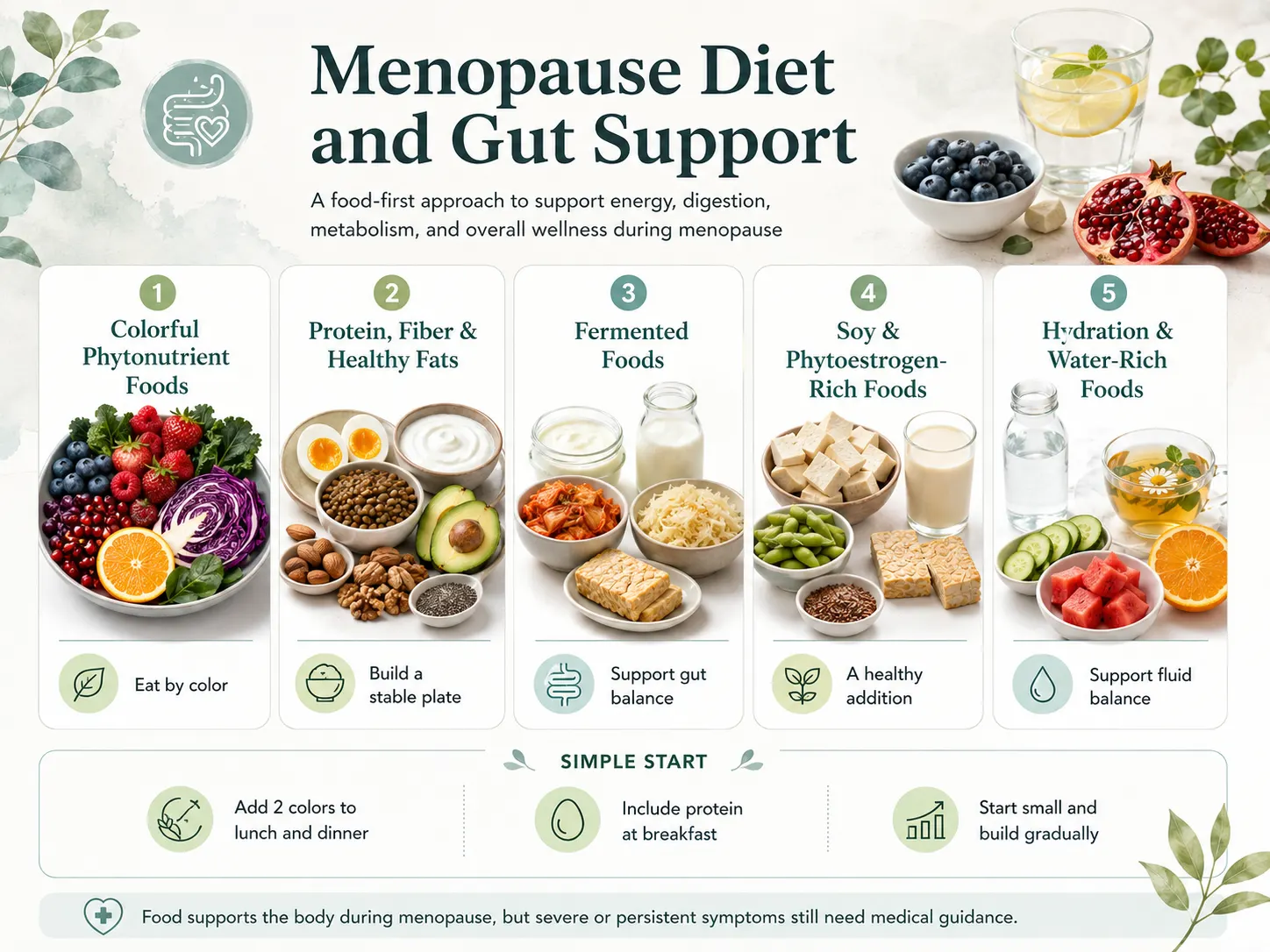
During menopause, the body may become more sensitive to blood sugar changes, inflammation, poor gut health, low protein intake, dehydration, and loss of muscle. That is why a menopause-supportive diet should not be about eating less or following a strict plan. It should be about eating in a way that supports energy, digestion, hormone metabolism, muscle, skin, and long-term metabolic health. One honest note before we go further: vaginal dryness is driven primarily by hormonal changes, not by diet or hydration. Food supports your overall health, but vaginal dryness needs the targeted care covered later in this guide, and often medical treatment.
In my practice, I usually divide menopause nutrition into five simple food categories:
-
Colorful phytonutrient foods
-
Protein, fiber, and healthy fats
-
Fermented foods for gut support
-
Soy and phytoestrogen-rich foods
-
Hydration and water-rich foods
1.1 Colorful Phytonutrient Foods: Eat by Color
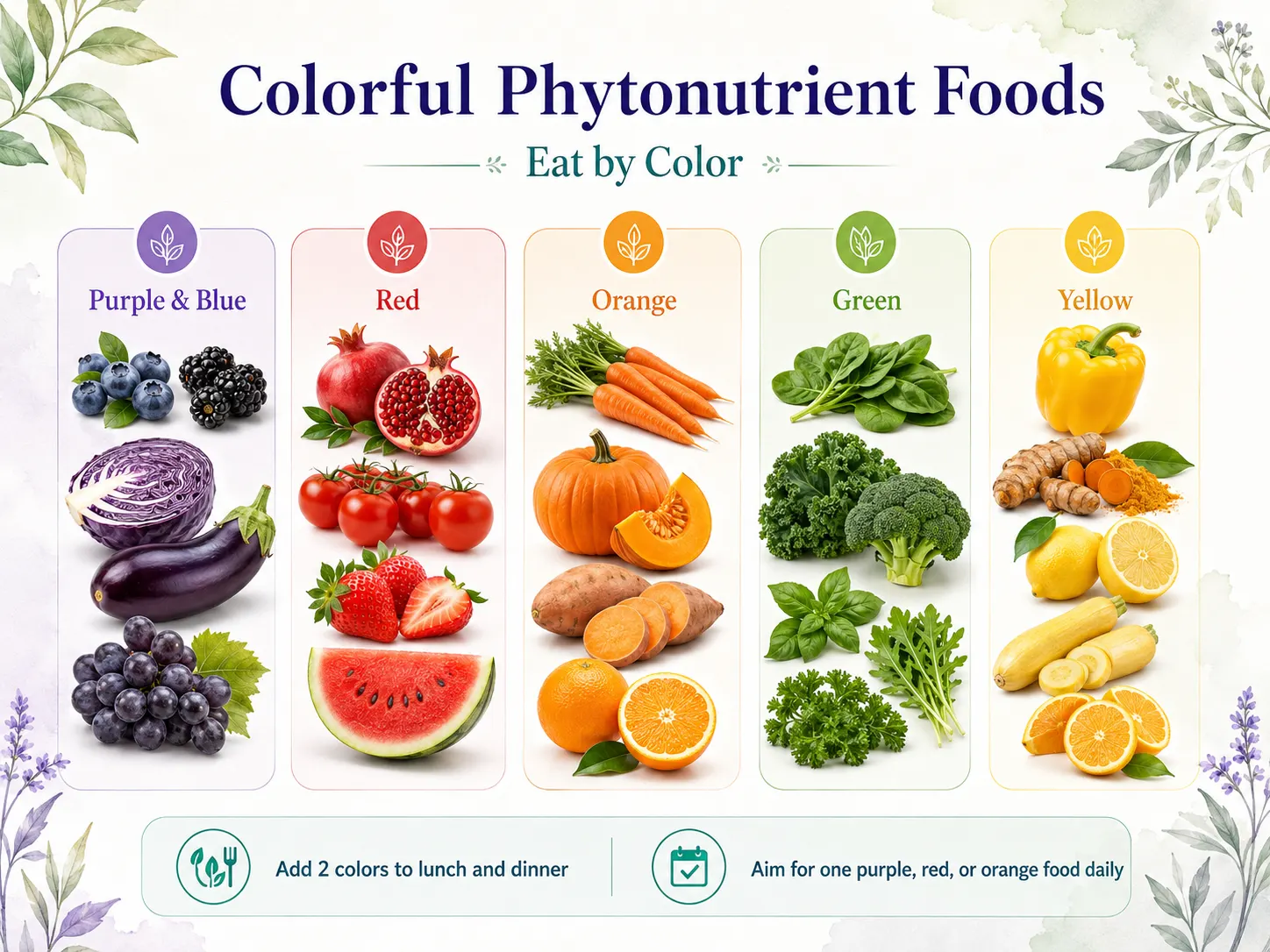
Different food colors come from different phytonutrients. These compounds do not work like medicine, but they can support body systems commonly affected during menopause, including inflammation balance, brain function, skin health, gut health, blood vessel function, metabolism, and bone support.
|
Food Color
|
What to Add
|
What It Contains
|
How It May Help During Menopause
|
|
Purple and Blue Foods
|
Blueberries, blackberries, purple cabbage, eggplant, black grapes
|
Anthocyanins, polyphenols, fiber, vitamin C, and antioxidants
|
Anthocyanins help fight oxidative stress and support blood vessel health. This can be helpful for women dealing with brain fog, memory concerns, poor circulation, inflammation, and cellular aging during midlife.
|
|
Red Foods
|
Pomegranate, tomatoes, strawberries, watermelon
|
Lycopene, vitamin C, ellagic acid, anthocyanins, polyphenols, and water-rich antioxidants
|
Lycopene and polyphenols support heart health and antioxidant defense. Pomegranate and berries also add vascular and skin-supportive nutrients, which can be useful when menopause brings skin changes, inflammation concerns, or higher cardiovascular risk.
|
|
Orange Foods
|
Carrots, pumpkin, sweet potato, oranges
|
Beta-carotene, carotenoids, vitamin C, potassium, and fiber
|
Beta-carotene supports skin and immune health, while vitamin C supports collagen formation. These foods are useful for women noticing dull skin, low energy, immune changes, or increased oxidative stress during menopause.
|
|
Green Foods
|
Spinach, kale, broccoli, herbs, arugula, parsley
|
Folate, magnesium, vitamin K, chlorophyll, fiber, plant nitrates, and sulforaphane in cruciferous vegetables
|
Green foods provide nutrients that support bowel regularity, gut health, bone health, blood pressure, and detoxification pathways. Cruciferous vegetables like broccoli may also support healthy estrogen metabolism.
|
|
Yellow Foods and Spices
|
Yellow bell peppers, turmeric, lemon, yellow squash, citrus
|
Vitamin C, carotenoids, flavonoids, curcumin, and antioxidants
|
Vitamin C supports collagen and skin repair, while curcumin and flavonoids help with inflammation balance. These foods can support digestion, immune function, skin changes, and general recovery during menopause.
|
How I recommend using this: Add at least two colors to lunch and dinner, and try to include one purple, red, or orange food daily. This is not a direct cure for hot flashes, but it is a simple way to build an antioxidant-rich, gut-supportive, and anti-inflammatory food pattern during menopause.
1.2 Protein, Fiber, and Healthy Fats: Build a Stable Menopause Plate
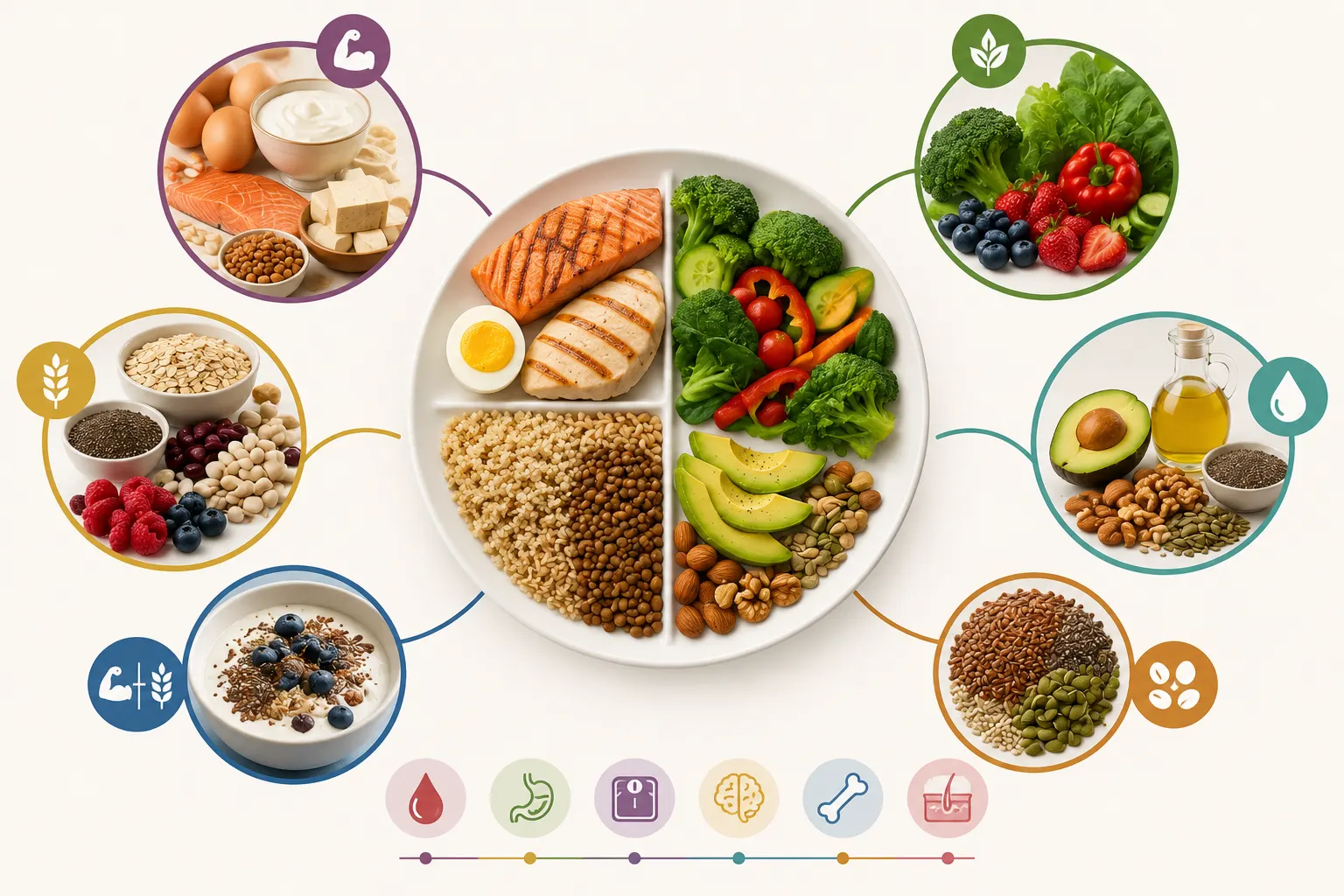
During menopause, many women notice more cravings, belly weight, energy dips, constipation, and loss of muscle tone. In these cases, I usually do not start by asking women to eat less. I first look at whether the plate has enough protein, fiber, and healthy fat to keep blood sugar and energy more stable.
|
Food Focus
|
What to Add
|
What It Contains
|
How It May Help During Menopause
|
|
Protein-rich foods
|
Eggs, Greek yogurt, cottage cheese, tofu, tempeh, lentils, beans, fish, chicken, paneer
|
Amino acids, iron, B vitamins, zinc, and muscle-supporting nutrients
|
Protein helps preserve muscle mass, which naturally becomes harder to maintain with age. It also improves fullness, supports metabolism, reduces frequent snacking, and may help women dealing with cravings, belly weight, low stamina, or body composition changes.
|
|
Fiber-rich foods
|
Vegetables, berries, oats, chia seeds, flaxseeds, beans, lentils, whole grains
|
Soluble fiber, insoluble fiber, prebiotics, polyphenols, and minerals
|
Fiber slows blood sugar spikes, supports bowel regularity, feeds beneficial gut bacteria, and helps cholesterol balance. This can be useful for women dealing with constipation, bloating, cravings, energy crashes, or metabolic changes.
|
|
Healthy fats
|
Avocado, olive oil, nuts, seeds, fatty fish, ground flaxseed
|
Omega-3 fats, monounsaturated fats, vitamin E, lignans, and fat-soluble nutrient support
|
Healthy fats improve satiety and support brain health, skin comfort, and absorption of vitamins A, D, E, and K.
|
|
Protein + fiber combinations
|
Greek yogurt with berries and chia; eggs with vegetables; lentils with salad; tofu with vegetables; beans with whole grains
|
A mix of amino acids, fiber, minerals, and slow-digesting carbohydrates
|
Combining protein and fiber helps meals digest more slowly. This may reduce afternoon crashes, sugar cravings, irritability, and overeating later in the day.
|
|
Flaxseed and seed mix
|
Ground flaxseed, chia seeds, pumpkin seeds, sesame seeds
|
Lignans, fiber, plant omega-3s, magnesium, zinc, and healthy fats
|
Seeds can support bowel regularity, hormone-metabolism pathways, cholesterol balance, and satiety. Ground flaxseed is especially useful because it adds both fiber and phytoestrogen-like lignans in a food-first form.
|
How I recommend using this: Start with breakfast. Add a clear protein source and one fiber-rich food before thinking about calorie cutting. For example, Greek yogurt with berries and chia, eggs with vegetables, tofu scramble, or cottage cheese with ground flaxseed.
Precaution: Increase fiber gradually and drink enough fluids, otherwise bloating or constipation can worsen. Protein needs should be personalized if you have kidney disease or other medical conditions.
1.3 Fermented Foods: Support the Gut-Menopause Connection
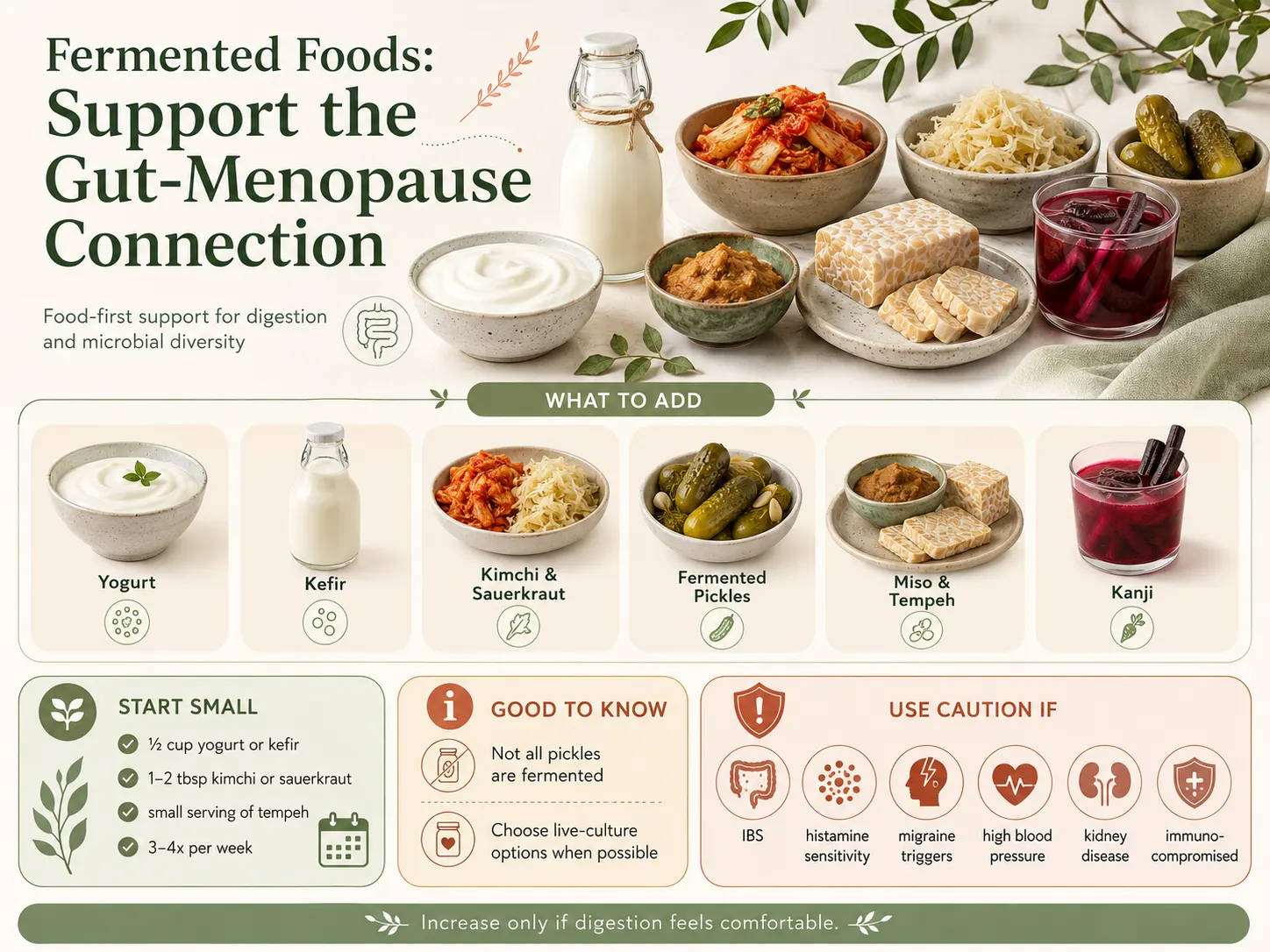
Gut health becomes important during menopause because digestion, bloating, constipation, inflammation, and immune balance can be influenced by the gut ecosystem. I do not recommend forcing fermented foods on every woman, but when tolerated, they can be a useful food-first way to support microbial diversity.
|
Fermented Food
|
What to Add
|
What It Contains
|
How It May Help During Menopause
|
|
Yogurt with live cultures
|
Plain Greek yogurt or unsweetened yogurt with live and active cultures
|
Probiotics, protein, calcium, B vitamins, and beneficial bacteria
|
Supports gut bacteria, digestion, calcium intake, and protein needs. This can be useful for women dealing with bloating, constipation tendency, low protein intake, or bone-health concerns.
|
|
Kefir
|
Plain kefir, preferably unsweetened
|
Probiotic strains, protein, calcium, and fermented dairy compounds
|
Kefir may support microbial diversity and bowel regularity. It can be helpful for women who tolerate dairy and want gut support in a drinkable form.
|
|
Kimchi and sauerkraut
|
Start with 1–2 tablespoons with meals
|
Lactic acid bacteria, fiber, vitamin C, plant compounds, and fermentation byproducts
|
These may support digestion and gut microbial balance. They can be helpful for bloating or sluggish digestion, but the sodium and spice level should be considered.
|
|
Naturally fermented pickles
|
Small portions of brine-fermented pickles, not vinegar pickles
|
Lactic acid bacteria, electrolytes, plant fiber, and salt
|
Fermented pickles may support gut microbes when they are truly fermented. They should be used carefully because many are high in sodium.
|
|
Miso and tempeh
|
Miso soup, miso dressing, tempeh stir-fry, tempeh bowls
|
Fermented soy compounds, plant protein, isoflavones, minerals, and beneficial fermentation byproducts
|
These offer both fermented-food support and soy phytoestrogens. They may be useful for women who want gut support, plant protein, and mild hormone-transition support through whole foods.
|
|
Kanji
|
Beetroot kanji or black carrot kanji in small amounts
|
Fermented plant compounds, lactic acid bacteria, antioxidants, and fluid
|
Kanji can support digestion and adds fermented plant diversity. Start with a small serving because some women may feel bloated if they add fermented drinks too quickly.
|
Important note: Not all pickles are fermented. Vinegar pickles are different from naturally fermented pickles. Shelf-stable fermented foods may also be pasteurized, which means they may not contain live cultures by the time you eat them.
How I recommend using this: Start small. Try one fermented food 3–4 times per week, such as ½ cup yogurt or kefir, 1–2 tablespoons of kimchi or sauerkraut, or a small serving of tempeh. Increase only if digestion feels comfortable.
Precaution: Fermented foods may not suit everyone. Be careful if you have IBS, severe bloating, histamine sensitivity, migraine triggers, high blood pressure, kidney disease, fluid retention, or are immunocompromised. Avoid unsafe homemade ferments or anything with mold, unusual smell, or poor storage.
1.4 Soy and Phytoestrogen-Rich Foods: A Healthy Addition, Not a Treatment
Soy foods and flaxseeds are often discussed during menopause because they contain phytoestrogens, which are plant compounds that can interact gently with estrogen receptors in the body. They do not work like hormone therapy, and they do not help every woman in the same way. I want to be clear about the distinction here: whole soy foods such as tofu, tempeh, and edamame can be part of a healthy, balanced diet, but they should not be relied on as a dependable treatment for menopause symptoms. Concentrated soy or isoflavone supplements are a different category entirely and should only be considered with medical guidance.
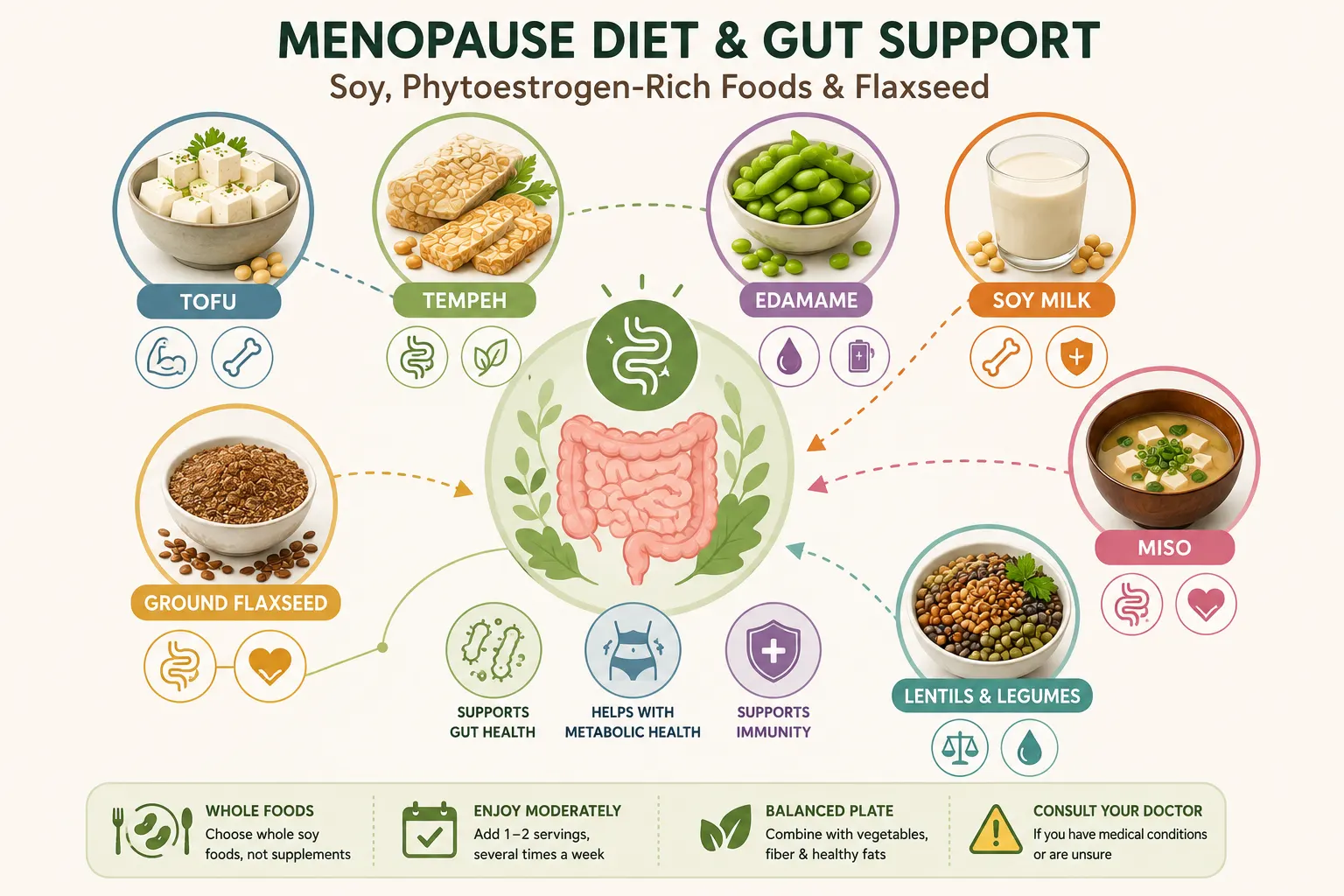
I prefer discussing whole foods first instead of jumping to high-dose isoflavone supplements.
|
Food
|
What to Add
|
What It Contains
|
How It May Help During Menopause
|
|
Tofu
|
Add tofu to bowls, stir-fries, soups, or salads
|
Soy isoflavones, plant protein, calcium if calcium-set, iron, and minerals
|
Isoflavones may gently interact with estrogen receptors; research on hot flashes is mixed, and any benefit tends to be modest. The more dependable value of tofu is its protein, which supports muscle, fullness, and metabolic health.
|
|
Tempeh
|
Use tempeh in stir-fries, wraps, bowls, or salads
|
Soy isoflavones, fermented soy compounds, plant protein, fiber, and minerals
|
Tempeh gives both phytoestrogen support and fermented-food support. It may be useful for women who want plant protein, gut support, and mild hormone-transition support from whole foods.
|
|
Edamame
|
Use as a snack, salad topping, or side dish
|
Soy isoflavones, protein, fiber, folate, and minerals
|
Edamame can support fullness, blood sugar balance, and protein intake while adding phytoestrogens in a simple whole-food form.
|
|
Unsweetened soy milk
|
Use in smoothies, oatmeal, or breakfast
|
Soy isoflavones, plant protein, and often calcium/vitamin D if fortified
|
Fortified soy milk can support protein intake and bone-related nutrients. It may be helpful for women who do not tolerate dairy or want a simple soy option.
|
|
Miso
|
Add to soup, dressing, or marinades
|
Fermented soy compounds, isoflavones, minerals, and umami-rich peptides
|
Miso provides small amounts of fermented soy and phytoestrogens. Because it is salty, it should be used in moderation, especially if blood pressure is a concern.
|
|
Ground flaxseed
|
Add 1 tablespoon to yogurt, oatmeal, smoothies, or salads
|
Lignans, fiber, plant omega-3 fats, magnesium, and polyphenols
|
Flaxseed supports bowel regularity, cholesterol balance, satiety, and hormone-metabolism pathways. The lignans act as phytoestrogen-like compounds in a food-first form.
|
|
Lentils and legumes
|
Add lentils, chickpeas, beans, or split peas to meals
|
Fiber, plant protein, minerals, polyphenols, and small amounts of phytoestrogen-like compounds
|
Legumes support gut bacteria, blood sugar balance, cholesterol, fullness, and steady energy, which can be useful for cravings, belly weight, and metabolic changes.
|
How I recommend using this: Start with one whole-food option several times a week. For example, tofu in a stir-fry, edamame as a snack, tempeh in a bowl, soy milk in a smoothie, or 1 tablespoon of ground flaxseed added to breakfast.
Best for: women who want nutritious plant-protein options as part of a balanced diet, cholesterol concerns, cravings, belly weight, and a food-first approach to overall health. Soy foods are a healthy addition, not a substitute for symptom treatment.
Precaution: Avoid soy if you are allergic. If you have a history of estrogen-sensitive cancer, complex hormone-related medical history, thyroid medication use, or are unsure whether soy is suitable for you, speak with your healthcare provider. Whole soy foods are different from concentrated soy or isoflavone supplements, which should not be used casually.
1.5 Hydration and Water-Rich Foods: Support Fluid Balance, Energy, and Tissue Comfort
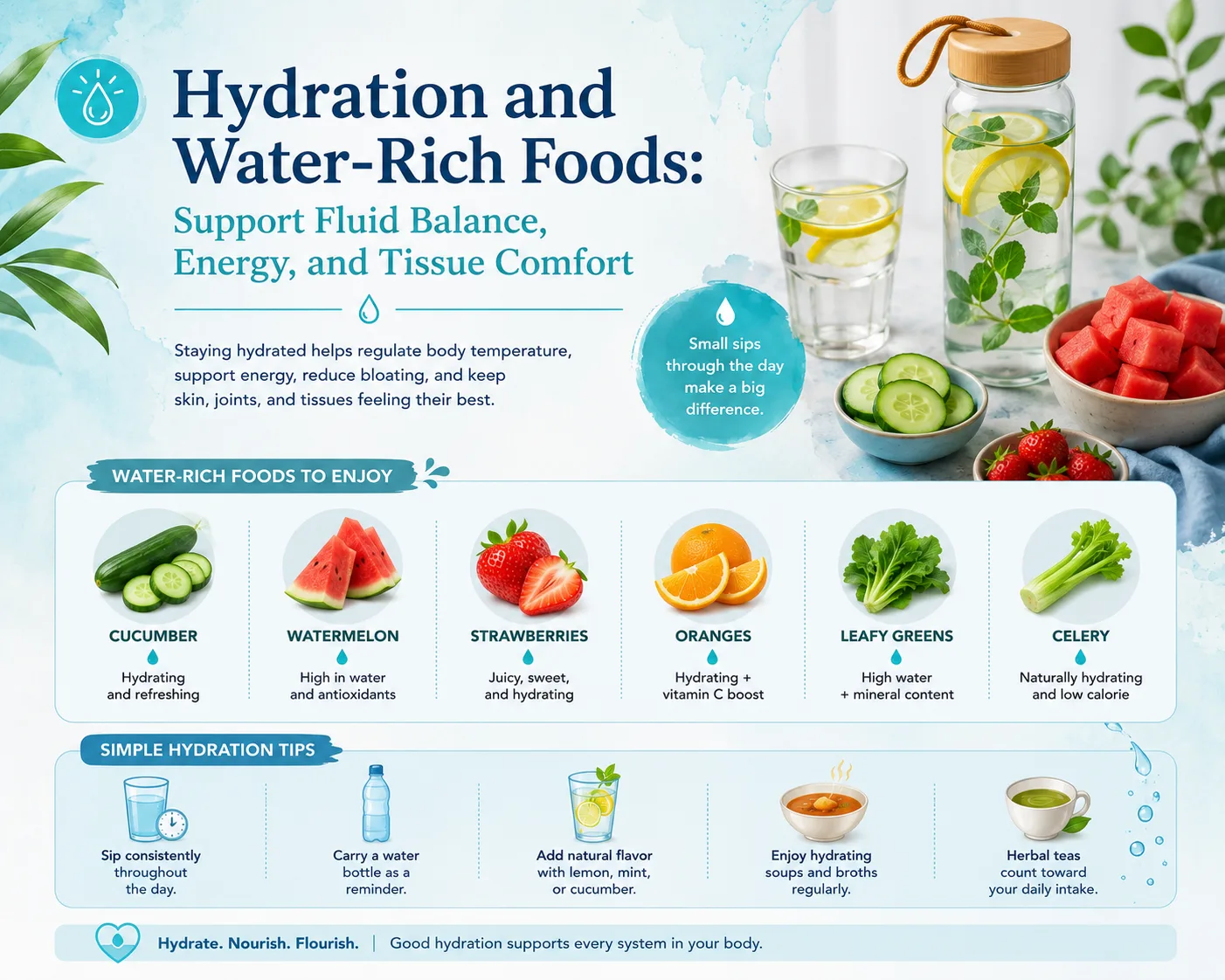
Hydration is often overlooked during menopause, but it matters more than many women realize. Night sweats, hot flashes, caffeine, alcohol, low water intake, constipation, and busy routines can all affect fluid balance. When hydration is poor, symptoms such as fatigue, headaches, constipation, dry skin, and low energy may feel worse. Hydration does not treat vaginal dryness, which is hormonal in origin, but it supports your overall energy and comfort.
I usually encourage women to think beyond plain water alone. Water-rich foods, soups, herbal teas, minerals, and steady fluid intake throughout the day can all support hydration.
|
Hydration Support
|
What to Add
|
What It Contains
|
How It May Help During Menopause
|
|
Water-rich fruits
|
Watermelon, berries, oranges, grapefruit, pomegranate
|
Water, vitamin C, antioxidants, potassium, polyphenols, and natural electrolytes
|
These foods support fluid intake while also adding antioxidants. They may help women dealing with fatigue, dry skin, constipation, night-sweat fluid loss, or low energy.
|
|
Water-rich vegetables
|
Cucumber, celery, lettuce, zucchini, tomatoes
|
Water, fiber, potassium, magnesium, and plant compounds
|
These support hydration and bowel regularity without adding heaviness to meals. They can be useful when constipation, bloating, or heat sensitivity is part of the symptom pattern.
|
|
Soups and broths
|
Vegetable soup, lentil soup, clear broth, light chicken soup
|
Fluids, minerals, electrolytes, protein or fiber depending on the soup
|
Soups can support hydration, minerals, digestion, and satiety. Lentil or vegetable soups are especially useful when fatigue and constipation are concerns.
|
|
Herbal teas
|
Chamomile, mint, ginger, tulsi, lemon balm, if tolerated
|
Fluid, plant compounds, flavonoids, and calming or digestive-supportive compounds
|
Herbal teas can support fluid intake and may be useful as part of an evening routine. Chamomile or lemon balm may feel calming, while mint or ginger may support digestion in some women.
|
|
Electrolyte support when needed
|
Coconut water in moderation, mineral-rich foods, clinician-guided electrolyte powders
|
Sodium, potassium, magnesium, and fluid-balancing minerals
|
Electrolytes may be useful for women with frequent sweating, heavy night sweats, dizziness, or fatigue linked with fluid loss. They should be personalized, especially if blood pressure, kidney, or heart issues are present.
|
How I recommend using this: Keep water nearby during the day, but also add hydrating foods to meals. For example, cucumber with lunch, berries at breakfast, soup with dinner, or herbal tea in the evening. If night sweats are frequent, keep water near the bed and rehydrate in the morning.
Best for: fatigue, headaches, constipation, dry skin, night-sweat fluid loss, heat sensitivity, and low energy.
Precaution: Be careful with sugary drinks, excess caffeine, alcohol, and unnecessary electrolyte powders. If you have kidney disease, heart disease, high blood pressure, fluid retention, or take diuretics, speak with your healthcare provider before using electrolyte supplements regularly.
2. Movement Reset, Strength, and Bone Support
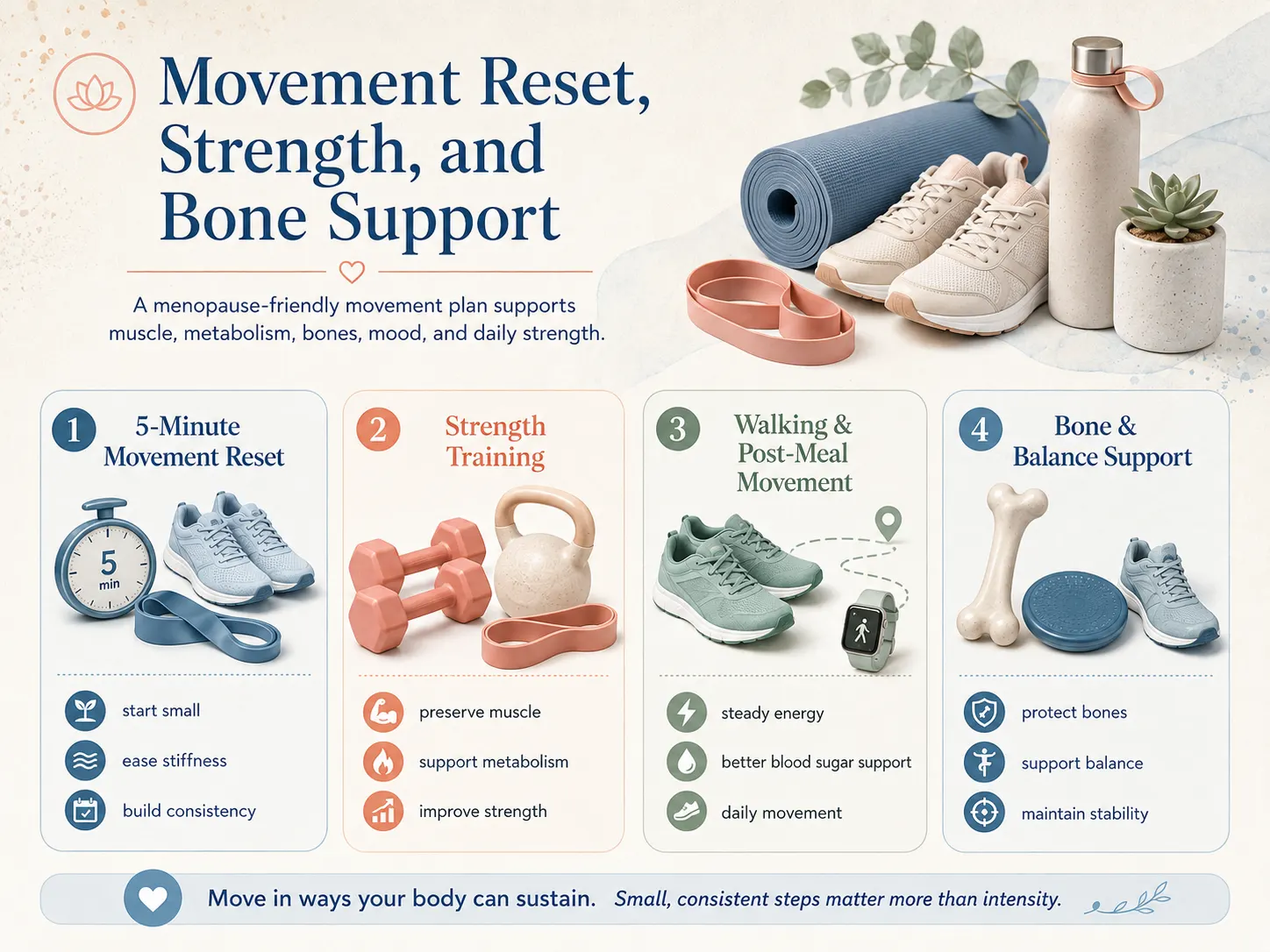
Movement during menopause should not be treated only as a way to burn calories. In my practice, I look at movement as a signal to the body — to preserve muscle, support metabolism, improve insulin sensitivity, protect bones, support mood, and maintain daily strength.
Many women tell me they feel more tired, stiff, weak, or less motivated during menopause. That is why I do not always start with a long workout plan. For many women, the first step is to make movement feel possible again, even if that starts with five minutes.
A menopause-friendly movement plan usually includes four parts:
-
5-minute movement resets
-
Strength training
-
Walking and post-meal movement
-
Bone and balance support
2. 1. Five-Minute Movement Reset
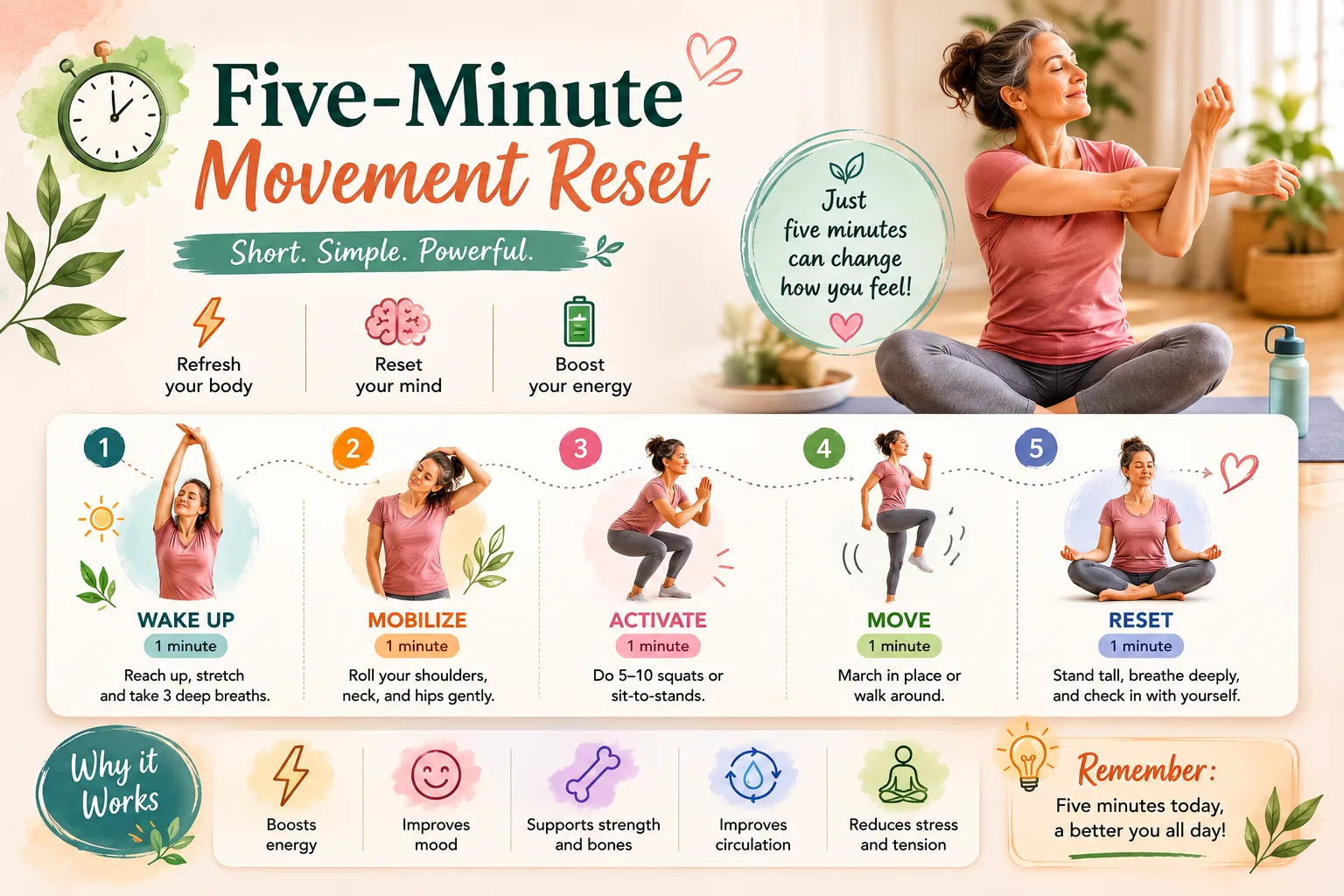
A short movement reset is useful for women who feel too tired, stiff, or overwhelmed to start a full workout. It is not meant to replace strength training, but it can help rebuild consistency.
|
What to Do
|
What It Activates
|
How It May Help During Menopause
|
|
March in place or walk around the house for 1 minute
|
Large leg muscles, circulation, heart rate gently
|
Helps reduce sluggishness, supports circulation, and gives the body a low-pressure way to start moving.
|
|
Shoulder rolls and arm circles for 1 minute
|
Upper back, shoulders, chest, posture muscles
|
Helps release desk-related tension and stiffness, especially when stress and poor sleep make the body feel tight.
|
|
Hip circles or gentle side bends for 1 minute
|
Hips, lower back, core, pelvic mobility
|
Supports mobility around the hips and lower back, where many women feel stiffness during midlife.
|
|
Chair squats or sit-to-stands for 1 minute
|
Glutes, thighs, core, balance
|
Helps maintain everyday strength needed for climbing stairs, getting up from chairs, and protecting muscle.
|
|
Slow breathing while standing tall for 1 minute
|
Diaphragm, posture, nervous system
|
Helps combine movement with nervous-system calming, useful when fatigue and stress show up together.
|
How to use it: Do this once daily, especially on days when a full workout feels unrealistic. It can be used in the morning, between work tasks, after long sitting, or before an evening walk.
2.2. Strength Training
Strength training becomes especially important during menopause because muscle naturally becomes harder to maintain with age. Less muscle can affect metabolism, posture, balance, insulin sensitivity, and long-term independence.
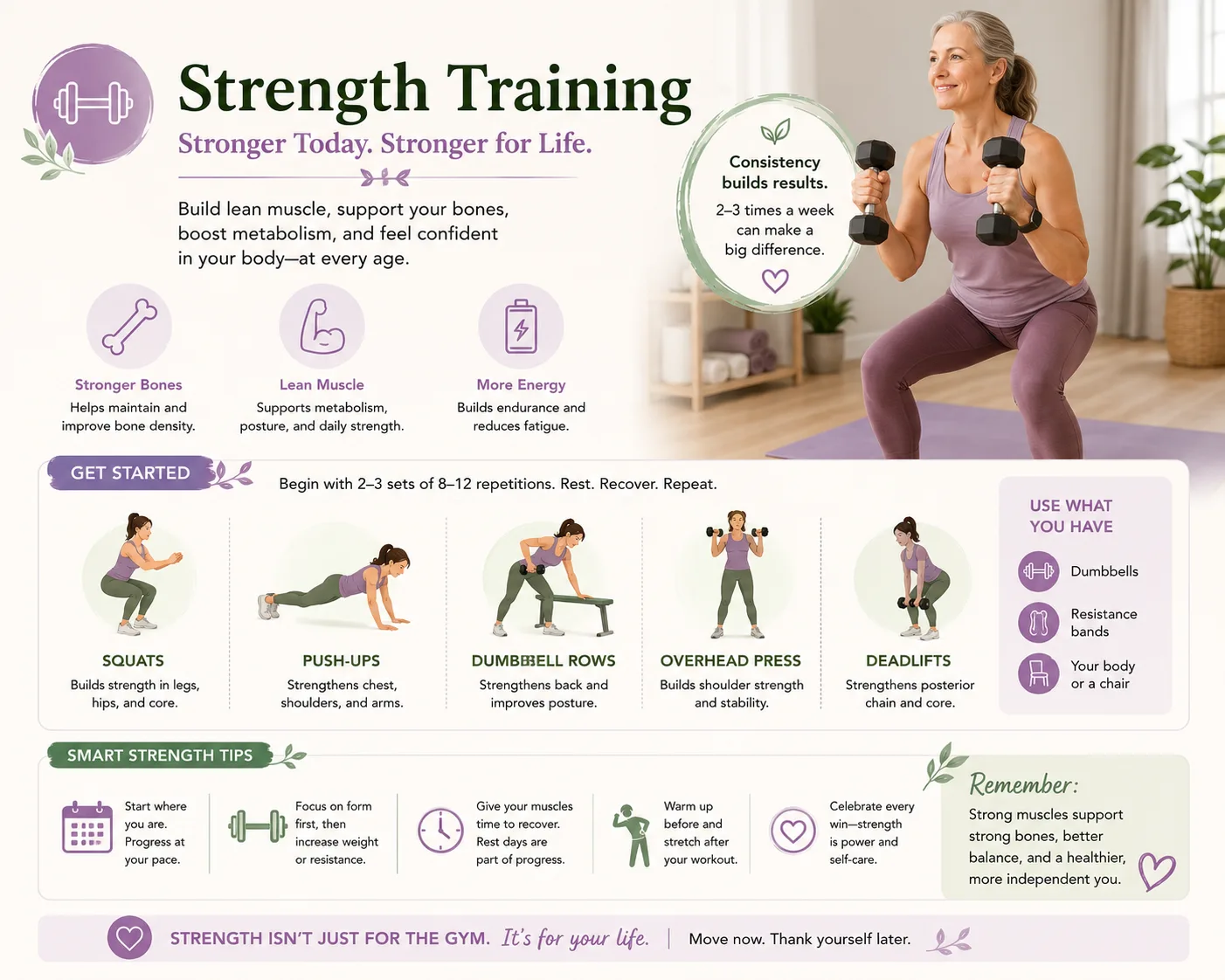
I usually recommend starting with simple movement patterns rather than complicated gym routines.
|
Movement Pattern
|
Simple Example
|
What It Trains
|
How It May Help During Menopause
|
|
Squat
|
Chair squat, sit-to-stand, bodyweight squat
|
Thighs, glutes, hips, core
|
Supports leg strength, balance, metabolism, and daily activities such as climbing stairs or getting up from a chair.
|
|
Hinge
|
Hip hinge, light deadlift pattern, glute bridge
|
Glutes, hamstrings, lower back, hips
|
Builds posterior-chain strength, supports posture, and helps protect the lower back when done with proper form.
|
|
Push
|
Wall push-up, incline push-up, light dumbbell press
|
Chest, shoulders, triceps, core
|
Supports upper-body strength, posture, and daily function such as pushing doors, lifting objects, or getting up from the floor.
|
|
Pull
|
Resistance-band row, dumbbell row
|
Upper back, shoulders, arms, posture muscles
|
Helps counter rounded posture, supports shoulder strength, and improves back muscle tone.
|
|
Carry
|
Farmer carry with light weights or grocery bags
|
Grip, core, shoulders, legs, posture
|
Trains practical full-body strength and balance, useful for everyday independence and stability.
|
How to use it: Start with 1–2 sets of 8–12 repetitions, 2 days per week. The movement should feel controlled, not rushed. Increase resistance slowly only after your form feels stable.
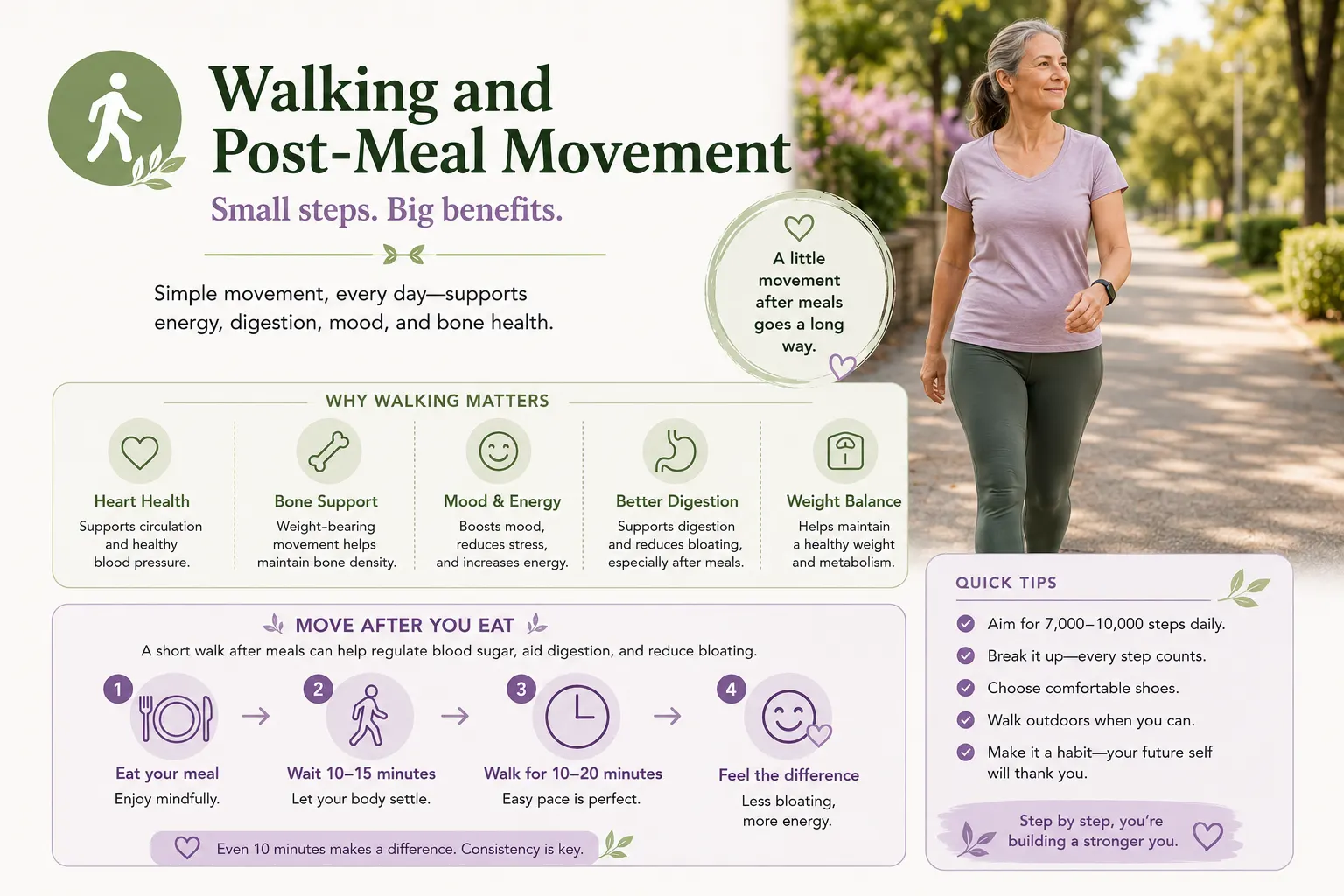
2.3. Walking and Post-Meal Movement
Walking is simple, but timing matters. A short walk after meals can be more useful for some women than one long walk done occasionally.
|
Walking Strategy
|
How to Use It
|
How It May Help During Menopause
|
|
Post-meal walk
|
Walk 10–15 minutes after lunch or dinner
|
Helps the body use glucose more efficiently and may reduce post-meal energy crashes, cravings, and blood sugar swings.
|
|
Morning walk
|
Walk outdoors in the morning when possible
|
Supports light exposure, mood, energy, circadian rhythm, and daily movement consistency.
|
|
Stress walk
|
Take a short walk after a stressful call, meeting, or argument
|
Helps release tension and may reduce stress-related cravings and irritability.
|
|
Low-impact walk
|
Walk on flat ground with supportive shoes
|
Helpful for women with joint stiffness, low stamina, or those restarting movement after a long gap.
|
How to use it: If you are not active, start with 10 minutes. If weight gain, cravings, or blood sugar swings are concerns, prioritize walking after one main meal.
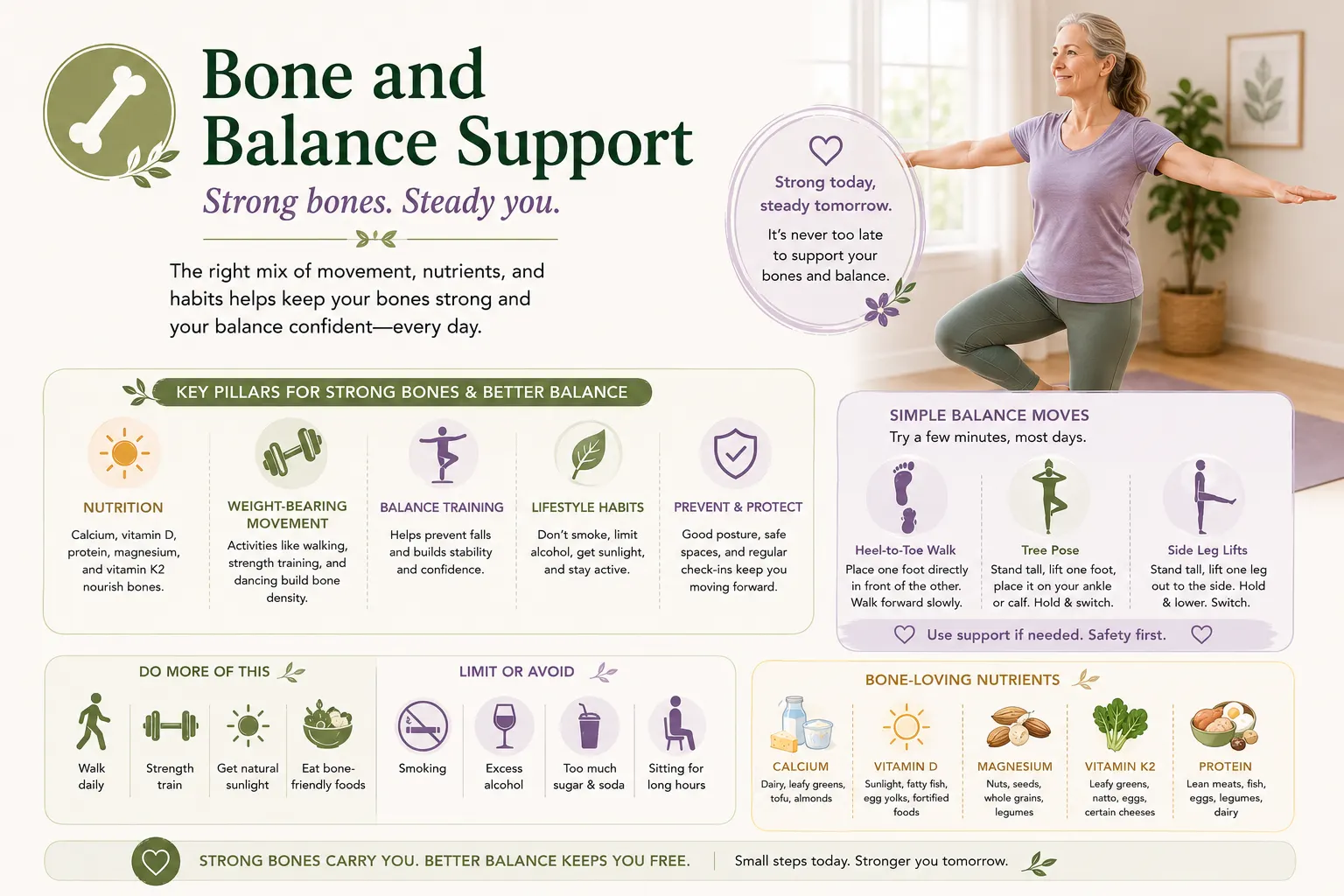
2. 4. Bone and Balance Support
Bone health becomes important during menopause because declining estrogen can speed up bone loss. Balance also matters because fall prevention is part of fracture prevention. Worth noting: movement and strength training have good evidence for protecting muscle and bone. For symptoms such as hot flashes, exercise supports overall wellbeing rather than acting as a direct treatment.
|
What to Add
|
Examples
|
How It May Help During Menopause
|
|
Weight-bearing movement
|
Brisk walking, stair climbing, step-ups, squats
|
Gives bones a safe loading signal and helps maintain lower-body strength.
|
|
Resistance training
|
Bands, dumbbells, bodyweight exercises
|
Supports muscle and bone together, which is important for long-term mobility and fracture prevention.
|
|
Balance practice
|
Heel-to-toe walking, single-leg balance near a wall or chair
|
Supports coordination, stability, and fall prevention.
|
|
Mobility work
|
Gentle yoga, hip mobility, ankle mobility, stretching
|
Helps reduce stiffness and supports safer movement patterns.
|
How to use it: Add balance practice 2–3 times weekly, especially after age 50 or if you feel less steady than before.
What to Avoid
Be careful with:
-
jumping suddenly into intense workouts
-
doing only cardio and skipping strength
-
exercising through pain
-
lifting heavy weights without learning form
-
using exercise as punishment for weight gain
-
overdoing Kegels without pelvic floor guidance
-
pushing hard when sleep, recovery, or energy is poor
When to Get Medical Guidance
Speak with your healthcare provider before starting a new exercise routine if you have osteoporosis, heart disease, uncontrolled blood pressure, dizziness, severe joint pain, balance problems, recent surgery, pelvic pressure, prolapse symptoms, or a history of fractures.
If movement causes chest pain, unusual shortness of breath, fainting, severe dizziness, worsening joint pain, pelvic heaviness, or urinary leakage that gets worse, stop and seek medical advice.
3. Breathwork, Sleep, and Cortisol Reset
Many women notice that menopause makes their body feel more reactive. Stress feels harder to manage, sleep becomes lighter, hot flashes feel worse during emotional overload, and the mind may feel “wired but tired” at night.
In my practice, I look at breathwork and sleep routines as nervous-system support. To be clear: breathing exercises are not a proven treatment for hot flashes. What they can do is help women feel calmer, sleep better, and cope with symptoms. They do not replace medical treatment when symptoms are severe, but they can help the body shift out of a high-alert state and into recovery mode.
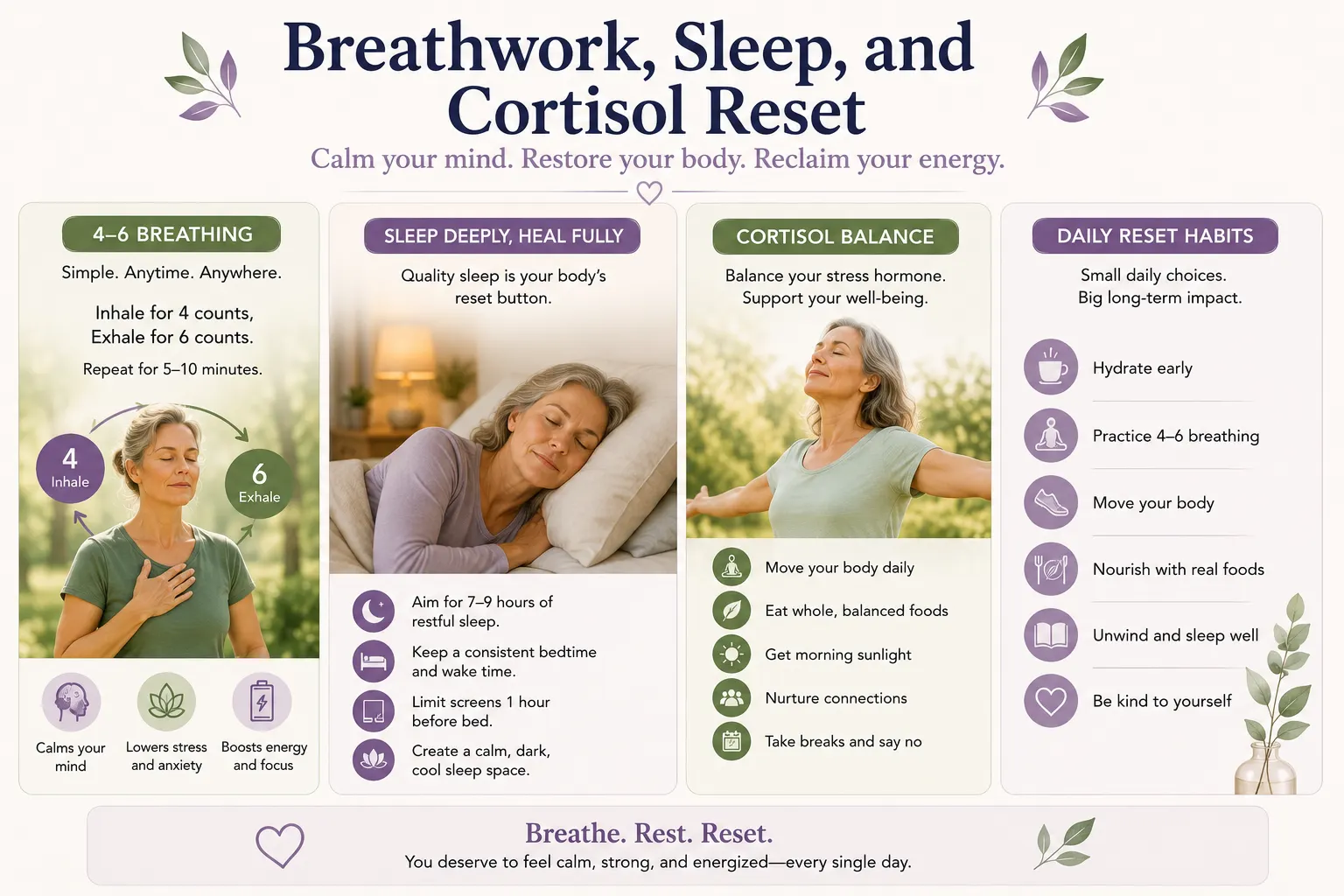
This section focuses on three practical tools:
-
4–6 breathing
-
Progressive muscle relaxation
-
A pre-sleep cortisol downshift routine
3.1. 4–6 Breathing
This is one of the simplest tools I recommend when women feel anxious, irritated, overstimulated, or unable to settle before sleep.
|
What to Do
|
What It Works On
|
How It May Help During Menopause
|
|
Inhale for 4 counts
|
Breath awareness and diaphragm activation
|
Helps bring attention away from racing thoughts and back to the body.
|
|
Exhale for 6 counts
|
Parasympathetic nervous-system activation
|
A longer exhale signals safety to the body and may reduce the “high-alert” feeling linked with anxiety and irritability.
|
|
Repeat for 3–5 minutes
|
Stress recovery and heart-rate calming
|
Short daily practice may help the body recover from stress faster and settle more easily before sleep.
|
|
Use during symptom flares
|
Coping with difficult moments, panic-like sensations, emotional reactivity
|
Breathing will not stop or treat a hot flash, but it may help you stay calmer while one passes. It can also be used after a stressful conversation, before a meeting, or during nighttime waking.
|
How I recommend using it: Practice once daily for 1–2 weeks, even on calm days. It works better as a trained reset than as something you try only when stress is already at its peak.
3.2. Progressive Muscle Relaxation
Progressive muscle relaxation, or PMR, is useful when stress shows up physically — tight shoulders, jaw clenching, restless legs, chest tightness, or difficulty relaxing in bed.
|
What to Do
|
What It Works On
|
How It May Help During Menopause
|
|
Tense one muscle group gently
|
Body awareness and stored tension
|
Helps you notice where the body is holding stress.
|
|
Hold for 3–5 seconds
|
Controlled muscle activation
|
Gives the nervous system a clear contrast between tension and relaxation.
|
|
Release slowly
|
Muscle relaxation and body calming
|
The release phase can help reduce physical tension before sleep.
|
|
Move from feet to face
|
Whole-body relaxation
|
Useful when the mind is tired but the body still feels restless or alert.
|
How I recommend using it: Keep it short. Start with 5 minutes at night. Avoid strong tensing if you have pain, recent injury, muscle strain, or severe joint issues.
3.3. Pre-Sleep Cortisol Downshift Routine
Many women tell me they feel exhausted all day but alert at night. In these cases, the evening routine matters.
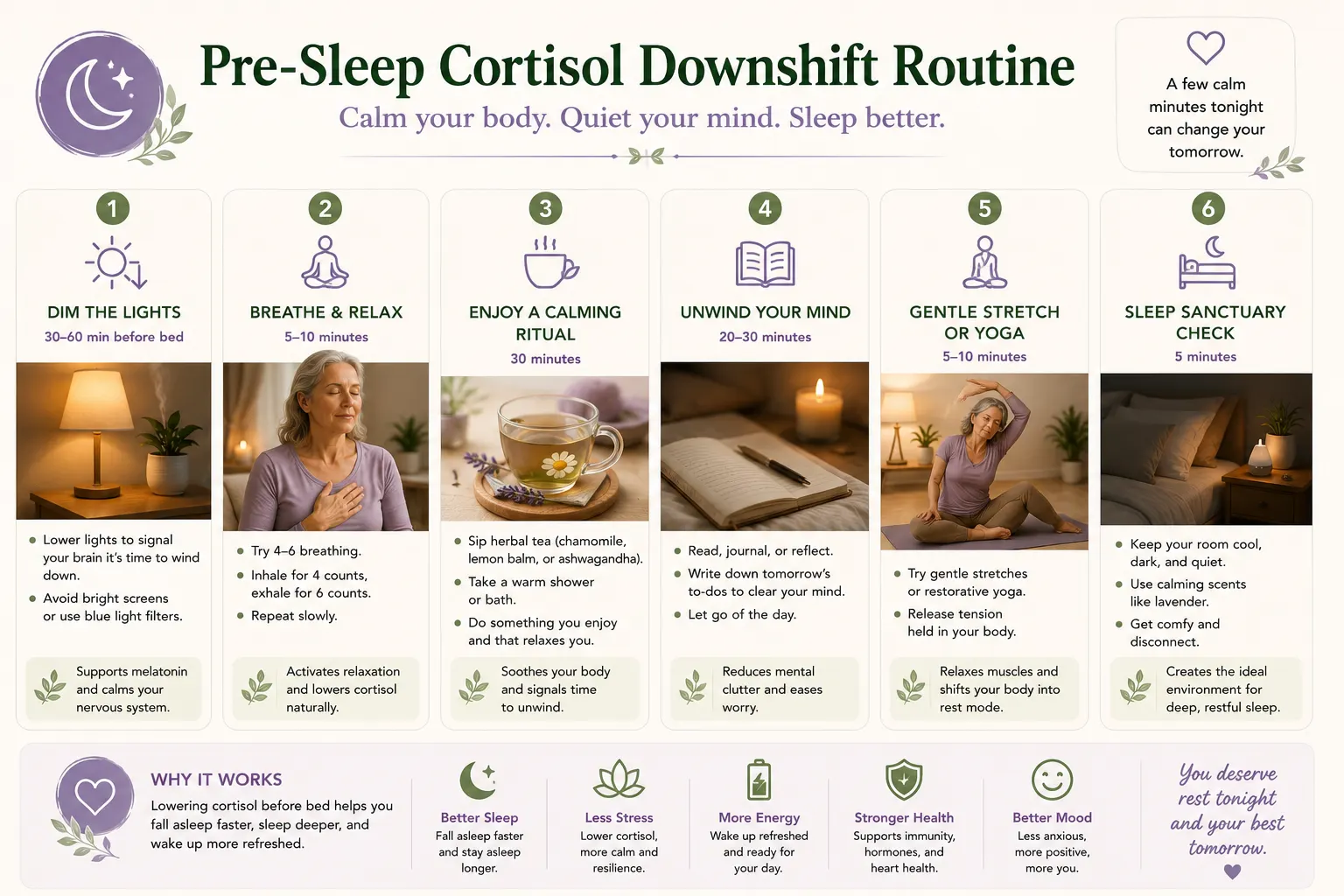
How I recommend using it: Choose two steps only for the first week. For example, stop scrolling 30 minutes before bed and do 4–6 breathing for 3 minutes. Once that feels easy, add another step.
When This Helps Most
This remedy is especially useful if you are dealing with:
-
anxiety or irritability
-
racing thoughts at night
-
2–3 a.m. waking
-
coping with hot flashes when they occur (breathing exercises are not a treatment for hot flashes themselves, but they may help you feel calmer while one passes)
-
mood swings
-
brain fog after poor sleep
-
cravings linked with exhaustion
-
feeling tired but unable to relax
|
Evening Step
|
What to Do
|
How It May Help During Menopause
|
|
Dim the lights
|
Reduce bright light 30–60 minutes before bed
|
Helps signal to the brain that the day is ending and supports the sleep-wake rhythm.
|
|
Stop phone scrolling
|
Avoid social media, emails, and stressful content before bed
|
Reduces mental stimulation, comparison, emotional activation, and racing thoughts.
|
|
Do 4–6 breathing
|
Practice for 3–5 minutes in bed or before lying down
|
Helps the body shift from stress mode toward rest mode.
|
|
Use a worry note
|
Write the worry and one next step for tomorrow
|
Helps stop repetitive thinking at night.
|
|
Keep the room sleep-focused
|
Cool, dark, quiet, and not overloaded with work items
|
Helps the brain associate the bedroom with rest rather than tasks.
|
What to Be Careful About
Breathwork and relaxation should feel calming, not forced. If breathing exercises make you dizzy, panicky, or uncomfortable, stop and return to normal breathing.
If you have severe anxiety, panic attacks, trauma symptoms, depression, persistent insomnia, or thoughts of self-harm, do not rely only on breathing or sleep routines. Please seek professional support.
When to Get Medical Guidance
Speak with your gynecologist or healthcare provider if sleep problems continue for weeks, night sweats wake you most nights, anxiety or low mood is worsening, or poor sleep affects work, driving, relationships, or daily functioning.
Also seek medical advice if you snore loudly, wake up gasping, have morning headaches, or feel very sleepy during the day, because sleep apnea and other medical conditions can also disturb sleep.
4. Vaginal, Urinary, and Pelvic Floor Support
Menopause is not only about hot flashes. Many women also experience vaginal dryness, painful sex, burning, irritation, urinary urgency, leakage, or repeated urinary infections. These symptoms are common, but they are not something women should silently tolerate.
In medical terms, these changes are often called Genitourinary Syndrome of Menopause, or GSM. GSM happens when lower estrogen levels affect the vaginal, vulvar, bladder, and urethral tissues. The tissues may become thinner, drier, less elastic, and more easily irritated, which can affect comfort, intimacy, urination, and daily quality of life.
I usually look at this area in four parts:
-
vaginal tissue moisture
-
friction and painful sex
-
vulvar and hygiene habits
-
pelvic floor and urinary symptoms
1. Vaginal Moisturizers for Ongoing Dryness
Vaginal moisturizers are different from lubricants. A moisturizer is used regularly to support ongoing dryness, not only during sex. One important thing to understand: moisturizers and lubricants relieve symptoms, but they do not reverse the underlying tissue changes that occur with menopause. When tissue changes are significant, prescription treatments such as vaginal estrogen can address the tissue itself in a way over-the-counter products cannot, so please discuss persistent symptoms with your gynecologist.
|
What to Use
|
What It Does
|
How It May Help
|
|
Nonhormonal vaginal moisturizer
|
Helps add and retain moisture in vaginal tissue
|
Useful for daily dryness, burning, irritation, or discomfort that is present even without sex.
|
|
Hyaluronic acid vaginal gel
|
Helps bind water and support tissue hydration
|
May be helpful for women who want a nonhormonal option for dryness and tissue comfort.
|
|
Regular schedule
|
Usually used several times per week, depending on product instructions
|
Works better when used consistently instead of only when symptoms become severe.
|
How I recommend using this: If dryness is frequent, use a vaginal moisturizer regularly for a few weeks and track whether burning, irritation, or daily discomfort improves.
2. Lubricants for Painful Sex or Friction
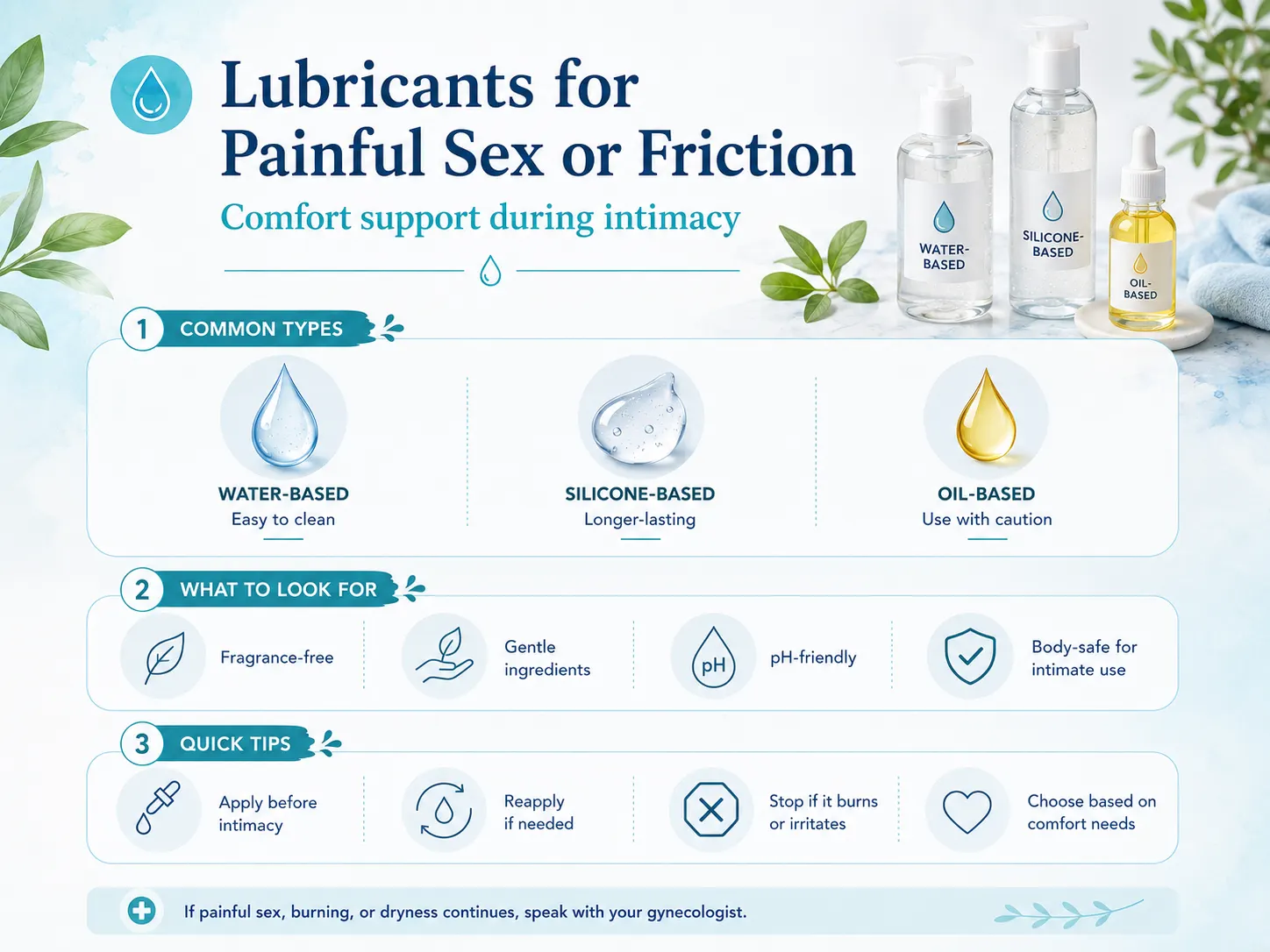
Lubricants are used during intimacy to reduce friction. They do not treat ongoing tissue dryness the same way moisturizers do, but they can make sex more comfortable.
|
Type of Lubricant
|
Best Use
|
What to Know
|
|
Water-based lubricant
|
Useful for many women and easy to clean
|
May need reapplication during sex. Choose fragrance-free options.
|
|
Silicone-based lubricant
|
Helpful when dryness or friction is more significant
|
Lasts longer than water-based options but may not be compatible with all silicone products.
|
|
Avoid scented or warming lubricants
|
Not recommended for sensitive tissue
|
These can irritate delicate vaginal or vulvar tissue.
|
Important: If sex is painful, do not “push through.” Pain can make the pelvic floor tighten more and create a cycle of fear, tension, and more discomfort.
3. Gentle Vulvar Care
Sometimes the products used around the vulva make dryness or irritation worse.
|
What to Avoid
|
Why It Matters
|
|
Douching
|
Can disturb the vaginal environment and increase irritation.
|
|
Vaginal steaming
|
Can irritate or burn delicate tissue and is not needed for vaginal health.
|
|
Scented washes or perfumed wipes
|
Fragrance can trigger burning, itching, or irritation.
|
|
Harsh soaps inside the vagina
|
The vagina does not need internal cleansing.
|
|
Random oils or herbal inserts
|
These can irritate tissue, alter pH, or increase infection risk.
|
How I recommend using this: Clean the vulvar area gently with water or a mild, unscented cleanser externally only. Wear breathable cotton underwear if irritation is frequent, and change out of sweaty workout clothes quickly.
4. Pelvic Floor and Urinary Support
Urinary urgency, leakage, pelvic heaviness, recurrent UTIs, and painful sex can sometimes involve pelvic floor dysfunction. But pelvic floor care should be individualized.
|
If You Notice
|
What May Help
|
Why It Matters
|
|
Urinary leakage with coughing, sneezing, or exercise
|
Pelvic floor assessment and guided strengthening
|
Some women need strengthening, but technique matters.
|
|
Urgency or frequent urination
|
Bladder habits, pelvic floor therapy, hydration review
|
Urgency is not always solved by doing more Kegels.
|
|
Painful sex or pelvic tightness
|
Pelvic floor relaxation and physical therapy
|
A tight pelvic floor may need relaxation, not strengthening.
|
|
Recurrent UTIs
|
Medical evaluation plus vaginal/urinary tissue support
|
Repeated urinary infections always deserve a proper medical evaluation. Please do not manage recurrent UTIs on your own with home remedies, because repeated infections can have underlying causes that need to be identified and treated.
|
Important: Random Kegels are not right for everyone. If the pelvic floor is already tight or painful, too many Kegels can worsen discomfort. A pelvic floor physical therapist can help decide whether you need strengthening, relaxation, coordination work, or bladder training.
When Medical Treatments May Be Needed
If nonhormonal care is not enough, your gynecologist may discuss medical options such as vaginal estrogen, vaginal DHEA, or other prescription treatments. In some cases, clinics may also discuss energy-based tissue treatments such as vaginal laser or radiofrequency therapy.
These tissue-based procedures should not be presented as simple natural remedies. The FDA has warned that energy-based “vaginal rejuvenation” devices have not been approved for menopause-related symptoms such as vaginal dryness, pain with sex, urinary symptoms, or sexual function, and they may carry risks. If you are considering any procedure, ask your gynecologist about evidence, benefits, risks, alternatives, and whether it is appropriate for your health history.
5. Natural Supplements and Herbs Under Medical Guidance
Many women ask about supplements for menopause because they want natural support for hot flashes, sleep problems, mood changes, fatigue, bone health, or inflammation. I understand that interest, but I also remind women that “natural” does not automatically mean safe, effective, or right for every body. I want to be upfront about the evidence: black cohosh, red clover, adaptogens, and similar herbal products have mixed and inconsistent research behind them. None of them is a reliable or proven treatment for menopause symptoms, and they should not be expected to work the way prescription treatments do. Where supplements have clearer value is in correcting genuine deficiencies, such as low vitamin D, identified through testing.
Supplements should be chosen according to symptoms, medical history, medications, and sometimes lab results. I do not recommend starting several supplements at once because it becomes difficult to know what helped, what caused side effects, or what may be interacting with other medicines.
Common Natural Supports Discussed in Menopause Care
|
Natural Support
|
What It Contains or Does
|
May Be Discussed For
|
What to Be Careful About
|
|
Black cohosh
|
An herbal root/rhizome traditionally used for menopause symptoms; some products may affect pathways involved in hot flashes
|
Hot flashes and night sweats in some women
|
Evidence is mixed. Rare liver problems have been reported with some products, and safety is uncertain in women with hormone-sensitive conditions. Avoid self-starting if you have liver disease or take multiple medications.
|
|
Red clover
|
Contains isoflavones, plant compounds structurally similar to estrogen
|
Mild hot flashes, mood support, cholesterol or heart-health discussions
|
Research results for hot flashes are inconsistent. Use caution with estrogen-sensitive conditions, pregnancy/breastfeeding, blood thinners, or complex medical history.
|
|
Magnesium
|
A mineral involved in muscle, nerve, and relaxation pathways
|
Sleep quality, muscle tension, constipation tendency, stress support
|
Can cause diarrhea. Needs caution in kidney disease and with some medications. Type and dose matter.
|
|
Vitamin D
|
Fat-soluble vitamin important for calcium absorption, bone, muscle, and immune function
|
Low vitamin D, bone health, muscle weakness, fatigue, osteoporosis risk
|
Best guided by blood levels. High doses can be harmful, especially with kidney disease, high calcium, kidney stones, or certain medical conditions.
|
|
Omega-3 fatty acids
|
EPA and DHA from fish oil or algae; also plant omega-3s from flax/chia
|
Inflammation balance, heart health, mood support, dry skin, metabolic health
|
May increase bleeding tendency at high doses or interact with blood thinners. Choose quality-tested products.
|
|
Adaptogens such as ashwagandha or rhodiola
|
Herbs used to support stress response and resilience
|
Stress, fatigue, sleep support, emotional balance
|
Not suitable for everyone. Use caution with thyroid disease, autoimmune conditions, liver disease, pregnancy, sedatives, antidepressants, or multiple medications.
|
|
Calcium
|
A mineral needed for bone structure and muscle function
|
Low calcium intake, bone health, osteopenia or osteoporosis prevention
|
Food-first is usually preferred. Excess supplemental calcium may worsen constipation or kidney-stone risk in some women.
|
|
Melatonin
|
A hormone involved in sleep-wake timing
|
Short-term sleep rhythm support
|
Can cause morning grogginess or vivid dreams and may interact with some medications. It should not be used as a long-term fix without reviewing the cause of poor sleep.
|
How I Usually Recommend Using Supplements
The safest approach is to start with a clear reason.
Before taking a supplement, ask:
-
What symptom am I trying to improve?
-
Do I have a deficiency or risk factor?
-
Am I taking medications that could interact?
-
Do I have liver, kidney, thyroid, heart, cancer, or bleeding-risk history?
-
How will I know if it is helping?
-
When should I stop if there is no benefit?
If a supplement is started, I prefer using one at a time for a defined period rather than adding several together. This makes it easier to track benefit and side effects.
Supplements I Do Not Recommend Taking Casually
Be especially careful with:
-
high-dose herbal blends
-
“hormone-balancing” formulas with many ingredients
-
concentrated isoflavone supplements
-
high-dose vitamin D without testing
-
high-dose turmeric, green tea extract, or liver-metabolized herbs
-
products claiming to “replace estrogen naturally”
-
supplements promoted as guaranteed cures for hot flashes, weight loss, or libido
A supplement label can look clean and natural but still contain ingredients that affect hormones, liver metabolism, bleeding risk, blood pressure, thyroid function, sleep, or mood.
When to Get Medical Guidance
Please speak with your gynecologist or healthcare provider before using menopause supplements if you have a history of breast cancer, uterine cancer, blood clots, liver disease, kidney disease, thyroid disease, autoimmune disease, heart disease, high blood pressure, seizures, depression, or if you take blood thinners, antidepressants, thyroid medication, sedatives, hormone therapy, or multiple prescriptions.
Stop any supplement and seek medical advice if you develop dark urine, yellowing of the skin or eyes, severe fatigue, abdominal pain, rash, swelling, dizziness, unusual bleeding, chest pain, or worsening mood symptoms.
|
NCCIH notes that many dietary supplements for menopause have not been clearly shown to relieve symptoms and may have side effects or drug interactions. For black cohosh, NCCIH reports mixed evidence, possible benefit in some studies, and rare but serious liver concerns; for red clover, NCCIH notes isoflavone content but inconsistent results for hot flashes.
|
6. Functional Medicine as Natural Menopause Support
In menopause, symptoms rarely happen in isolation. Fatigue, brain fog, weight gain, poor sleep, bloating, mood changes, hot flashes, and low energy can be connected to hormones, gut health, blood sugar, thyroid function, stress, inflammation, nutrition, and lifestyle patterns.
That is why I consider a functional medicine approach when symptoms feel confusing or persistent. One thing I want to be clear about: some of the tests discussed below, such as cortisol rhythm testing, gut microbiome testing, or stool testing, are specialized tests, not routine ones. They are not needed for most women. I consider them only in selected situations, when the clinical picture suggests the result would actually change the plan. Routine basics such as thyroid function, iron, B12, vitamin D, glucose, and lipids are a different matter and are commonly checked.
What Testing May Help Identify
|
If You Are Dealing With
|
What May Need to Be Checked
|
How It May Help During Menopause
|
|
Fatigue, brain fog, low stamina
|
Iron/ferritin, B12, vitamin D, thyroid function, glucose markers
|
Helps identify common reasons women feel exhausted or mentally foggy beyond hormonal change.
|
|
Weight gain or belly fat that does not match your routine
|
Thyroid function, fasting glucose, A1c, insulin resistance markers, lipids, medication review
|
Helps understand whether metabolism, blood sugar, thyroid, or medications are contributing.
|
|
Poor sleep or waking unrested
|
Thyroid function, glucose patterns, sleep apnea screening if symptoms suggest it; cortisol rhythm testing may be considered in selected cases
|
Helps identify whether sleep disruption is hormonal, stress-related, metabolic, or related to another sleep disorder.
|
|
Bloating, constipation, gas, or food sensitivity
|
Digestive history, nutrient absorption markers; gut microbiome or stool testing is a specialized test that may be considered in selected situations
|
Helps identify whether poor digestion, gut imbalance, or absorption issues are affecting energy and inflammation.
|
|
Hair shedding, brittle nails, dry skin
|
Ferritin, thyroid function, vitamin D, zinc, B12, medication review
|
Helps detect nutrient or thyroid-related contributors that may look like “just menopause.”
|
|
Bone health concerns
|
Vitamin D, calcium status when needed, DEXA scan, fracture risk review
|
Helps assess osteopenia, osteoporosis risk, and whether bone support should be intensified.
|
|
Hot flashes, mood changes, cycle changes
|
Hormone evaluation when appropriate, symptom timeline, medication review, thyroid screening
|
Helps clarify whether symptoms fit perimenopause/menopause patterns or need additional evaluation.
|
Why This Supports Natural Menopause Care
Functional medicine makes natural remedies more precise. For example:
-
If blood sugar is unstable, protein, fiber, walking, and meal timing become the priority.
-
If vitamin D is low, bone support should not rely only on calcium-rich foods.
-
If bloating is severe, fermented foods may not be the best first step.
-
If thyroid function is abnormal, fatigue and weight gain may not improve with diet alone.
-
If stress and poor sleep are driving symptoms, breathwork, sleep reset, and cortisol support become more important.
The point is simple: the right remedy depends on the reason behind the symptom.
How I Usually Recommend Starting
Before changing everything, track your symptoms for 7 days.
Write down:
-
sleep and wake time
-
night sweats or hot flashes
-
meals, protein, and fiber intake
-
caffeine and alcohol
-
bloating or bowel changes
-
mood, anxiety, or irritability
-
energy dips
-
movement and recovery
-
vaginal or urinary symptoms
-
supplements or medications
This gives your provider a clearer picture and helps decide whether lifestyle changes are enough or if testing is needed.
What to Be Careful About
Avoid ordering large test panels without a clear reason. More testing does not always mean better care. Tests should answer a specific question and guide a specific decision.
Also avoid starting multiple supplements just because symptoms feel hormonal. Supplements should be matched to your symptoms, labs, medications, and health history.
When to Get Medical Guidance
Speak with your gynecologist or healthcare provider if symptoms are severe, sudden, unusual, or not improving with lifestyle changes. This is especially important for postmenopausal bleeding, heavy or irregular bleeding, rapid weight changes, extreme fatigue, persistent bloating, palpitations, dizziness, severe mood changes, recurrent infections, or unexplained pain.
A functional medicine approach can be helpful because it connects the dots instead of treating every symptom separately.
7. Anti-Inflammatory Lifestyle and Environmental Support
Menopause support is not only about food, exercise, sleep, or supplements. The daily environment around a woman also matters , what she drinks, what she smokes or avoids, what products she uses, how cluttered or overstimulating her space feels, and which habits repeatedly trigger inflammation, stress, poor sleep, or hot flashes.
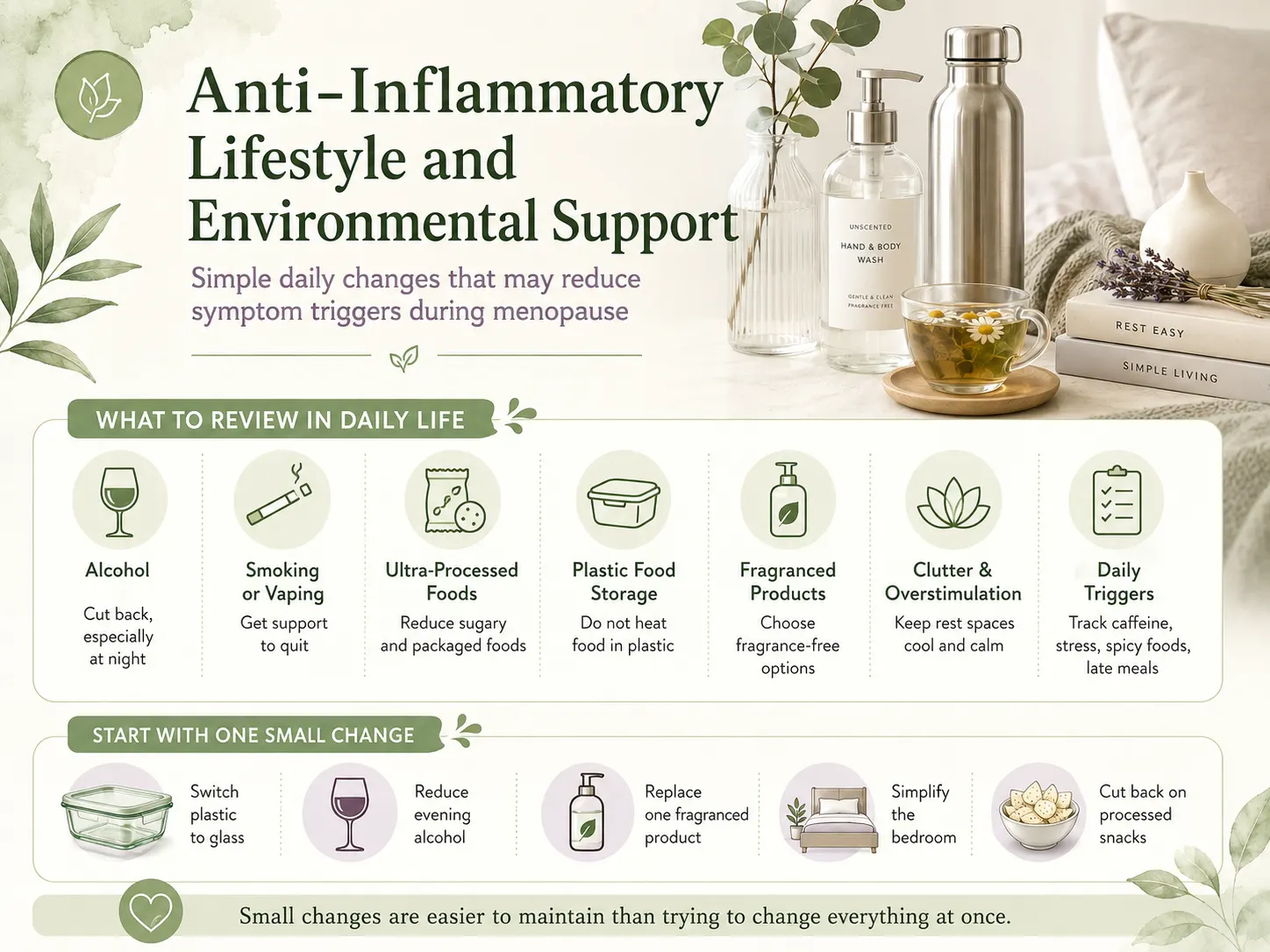
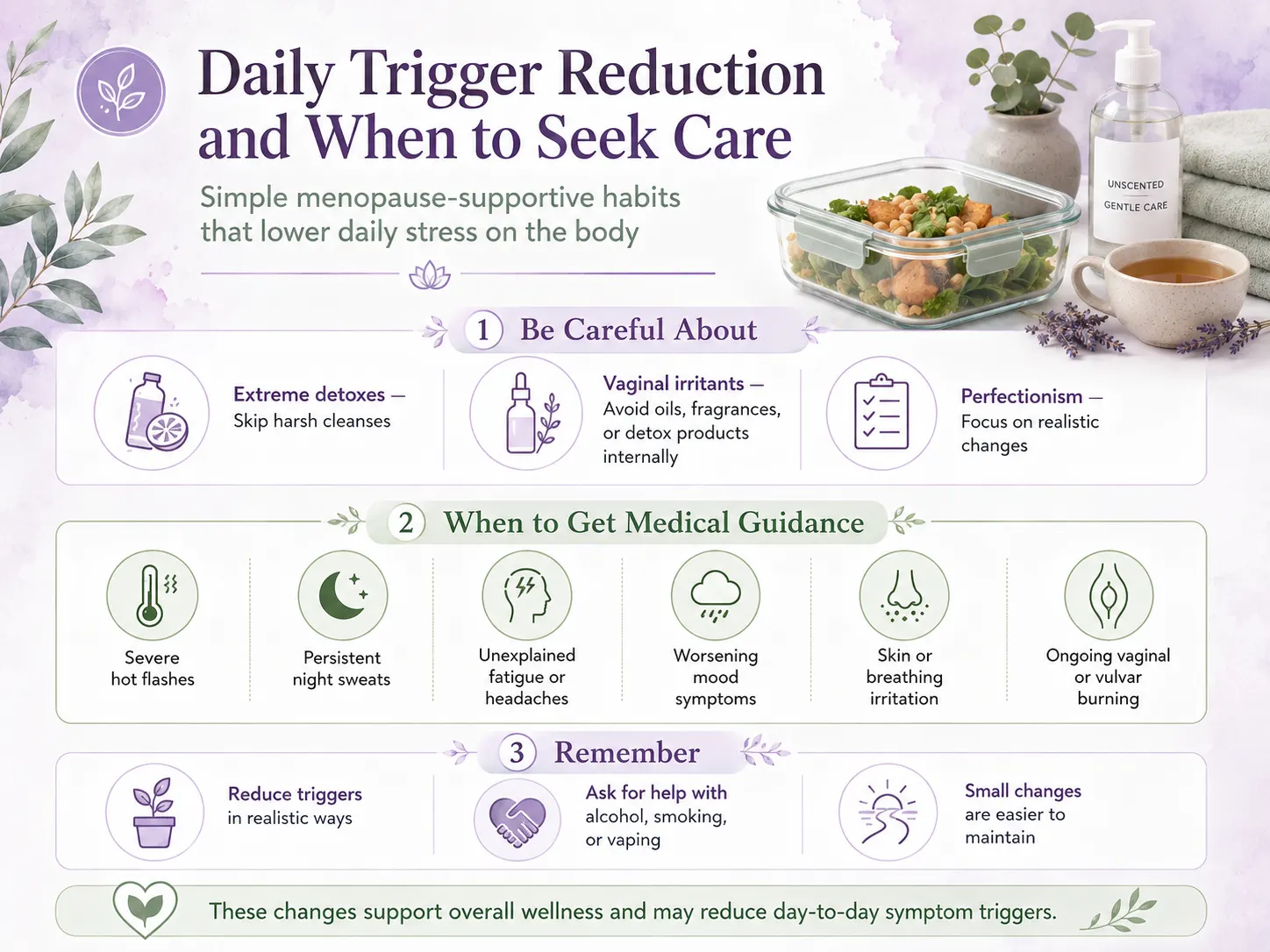
I do not recommend becoming fearful of every product or trying to live perfectly. The goal is to reduce the daily load on the body in realistic ways. As with the other lifestyle steps in this guide, these changes support overall wellness and may reduce day-to-day symptom triggers, but they are not direct treatments for menopause symptoms.
What to Review in Your Daily Lifestyle
|
Area to Review
|
What to Reduce or Change
|
How It May Help During Menopause
|
|
Alcohol
|
Reduce or pause alcohol, especially in the evening
|
Alcohol can worsen sleep quality, night sweats, hot flashes, mood changes, cravings, and belly weight in some women.
|
|
Smoking or vaping
|
Work toward quitting with medical support if needed
|
Smoking affects blood vessels, bone health, skin, cardiovascular risk, and overall hormone resilience. It can also make menopause symptoms harder to manage.
|
|
Ultra-processed foods
|
Reduce packaged snacks, sugary drinks, refined carbs, processed meats, and fried foods
|
Lowering ultra-processed foods may support blood sugar, gut health, inflammation balance, cravings, energy, and metabolic health.
|
|
Plastic food storage
|
Avoid heating food in plastic; use glass or stainless steel when possible
|
Heating plastic may increase chemical exposure. Switching to glass or steel is a simple way to reduce unnecessary environmental hormone stressors.
|
|
Fragranced products
|
Choose fragrance-free or low-irritant options for intimate care, laundry, and body products
|
Fragrances and harsh products can worsen vulvar irritation, headaches, sensitivity, and skin discomfort in some women.
|
|
Household clutter and overstimulation
|
Keep the bedroom and rest spaces simple, cool, and calming
|
A calmer environment can support sleep routines, stress recovery, and nervous-system regulation.
|
|
Daily trigger patterns
|
Track caffeine, alcohol, spicy foods, late meals, poor sleep, stress, and hot flashes
|
Helps identify what repeatedly worsens symptoms instead of guessing or avoiding everything.
|
How I Usually Recommend Starting
Choose one small change for two weeks:
-
Stop heating food in plastic containers.
-
Reduce alcohol and track hot flashes or sleep.
-
Replace one fragranced product with an unscented option.
-
Keep the bedroom cooler, darker, and less cluttered.
-
Reduce ultra-processed snacks during the workday.
-
Create a 10-minute evening reset without screens or multitasking.
Small changes are easier to maintain than trying to “detox” your whole life at once.
What to Be Careful About
Avoid extreme detox programs, harsh cleanses, or fear-based wellness advice. The liver, kidneys, gut, lungs, and skin already help the body process and eliminate waste. It supports those systems with food, hydration, sleep, movement, and lower exposure to avoidable irritants, not to punish the body.
Also avoid inserting oils, fragrances, herbal products, or “detox” products into the vagina. These can irritate delicate tissue and disturb the vaginal environment.
When to Get Medical Guidance
Speak with your healthcare provider if you have severe hot flashes, persistent night sweats, unexplained fatigue, recurrent headaches, worsening mood symptoms, skin reactions, breathing irritation, or vaginal/vulvar burning that continues despite removing obvious triggers.
If alcohol, smoking, or vaping is difficult to reduce, ask for medical support. These are health issues, not willpower issues.
Important: Symptoms That Should Never Be Assumed to Be Menopause
Before I close, I want to leave you with the most important message in this entire guide. Menopause is common, but it should never become the automatic explanation for every symptom in midlife. Some symptoms need a medical evaluation first, because they can signal conditions that have nothing to do with menopause. Please see your gynecologist or healthcare provider promptly, and do not rely on natural remedies, if you experience any of the following:
Any bleeding after menopause (this always needs evaluation, without exception), recurrent urinary tract infections, persistent bloating that does not settle, unexplained weight loss, severe or worsening fatigue, or significant mood changes, including persistent low mood, anxiety that interferes with daily life, or any thoughts of self-harm. These symptoms deserve proper medical attention, not assumption. Getting them checked is not an overreaction. It is exactly what a careful approach to midlife health looks like.
Final Thoughts
Menopause is different for every woman, so natural remedies should not be used as random trial-and-error. The best results usually come from understanding your symptom pattern and choosing support that fits your body, whether that means improving your diet and gut health, building strength, calming the nervous system, supporting vaginal and urinary comfort, or using supplements only when appropriate.
These 7 natural remedies for menopause can help you start in a more informed and practical way, but they are not a replacement for medical care. If your symptoms are severe, unusual, or affecting your quality of life, speak with your gynecologist or healthcare provider for personalized guidance.
Have you tried any natural menopause remedies that helped you? Share your experience in the comments, or leave your question below if you are unsure where to start.

 Meet Your Doctor

Leave a Comment